Updated 18 November 2026
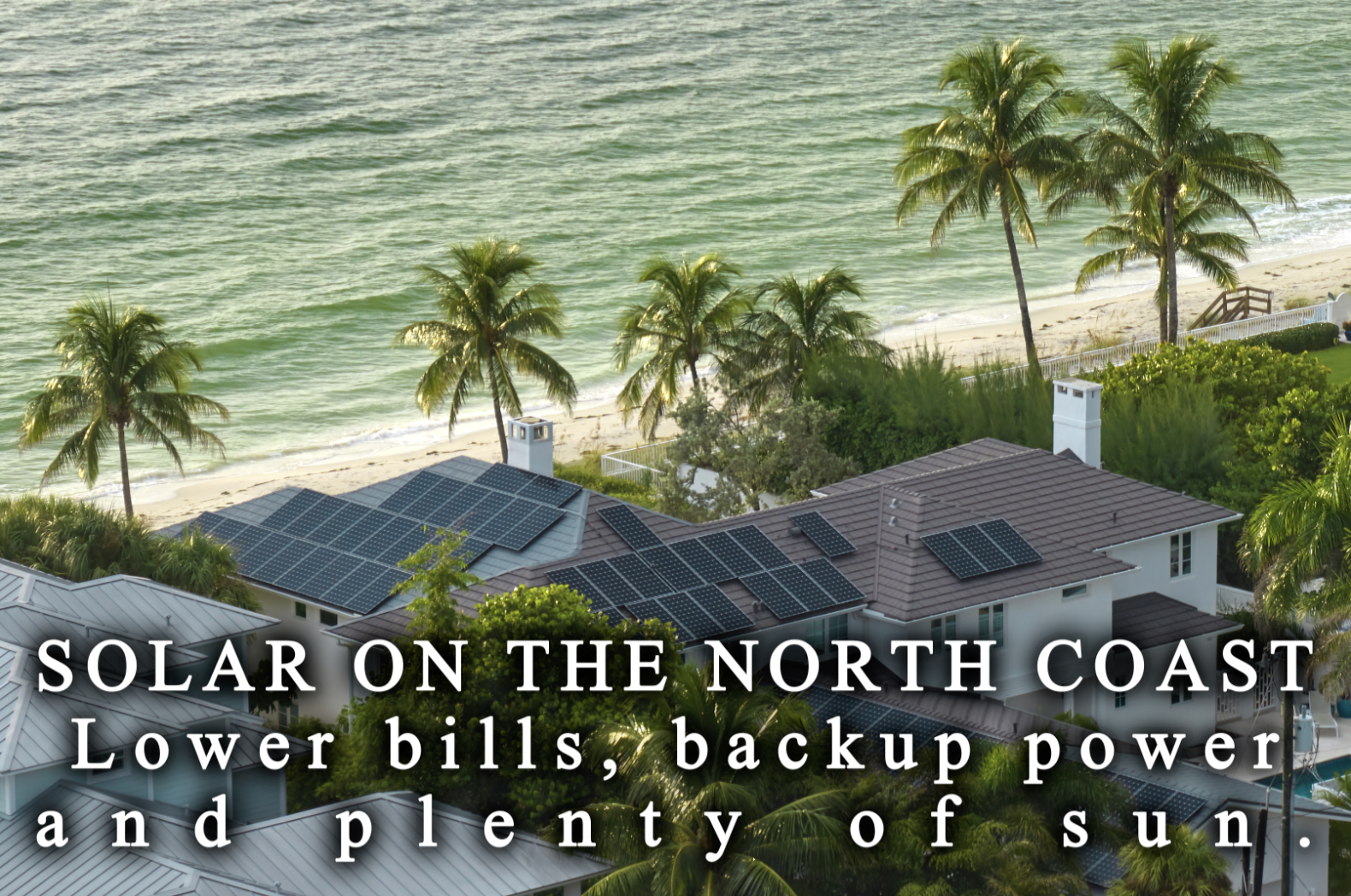
With strong sun all year and grid interruptions part of life, solar makes practical sense for many North Coast homes. Here’s how owners use it: grid-tied systems with net metering, batteries for backup, the incentives available, and how to install and maintain it on the coast.
Quick Answers
Why do North Coast owners add solar?
To reduce electricity bills, which can be significant with air-conditioning and pools, and — with batteries — to keep power running through grid interruptions.
The Caribbean sun makes solar productive year-round.
Solar also adds appeal for renters and buyers.
What is net metering?
A programme under which a grid-tied solar system feeds surplus electricity to the grid and the owner is credited against what they draw, through the electricity distributor — EDENORTE on the North Coast.
The connection is approved and metered by the distributor.
An installer manages the application.
What incentives apply?
Law 57-07 on renewable energy provides tax incentives for renewable-energy equipment, and supports net metering for small producers.
The installer confirms which incentives apply to your system.
Incentives reduce the upfront cost.
Do I need batteries?
For backup during grid interruptions, yes: a grid-tied system without batteries normally shuts down when the grid does.
A hybrid system with an inverter and batteries keeps essentials running.
Many homes already have an inverter and batteries that solar can recharge.
How big a system do I need?
It depends on consumption — air-conditioning, pool pumps and appliances — and the roof area; an installer sizes the system from your bills.
Start by reducing waste: efficient AC units and pool pumps shrink the system needed.
Condo owners need the building’s approval for roof installations.
What about salt air and storms?
Use corrosion-resistant mounting hardware and fixings, rated for coastal and hurricane conditions, and have the installation inspected after storms.
Panels should be secured to withstand high winds.
Insurance should cover the system.
Does solar suit condos?
It depends on the building: roof space is shared, so installations need approval from the community, and some buildings install shared systems.
Batteries and inverters still provide unit-level backup.
Check the minutes for any energy plans.
What maintenance does solar need?
Regular panel cleaning — salt and dust reduce output — and periodic checks of inverters, batteries and connections.
Your property manager can include it in routine visits.
Battery life depends on use and quality.
Does solar add value?
It reduces running costs and adds resilience, which buyers and renters value — particularly remote workers who need reliable power.
List backup power and solar in rental listings.
Keep installation and warranty documents for resale.
How does Blue Sail Realty help?
By identifying homes with good solar potential or existing systems, and introducing installers and overseeing work through its management team.
Clients describe Blue Sail Realty introducing trusted tradespeople and supervising work on site.
James Oosterman, Broker/CEO, holds the CIPS designation few Dominican agents hold.
How does the 40% solar tax credit work?
Law 57-07 allows a one-time credit against Dominican income tax of up to 40% of the cost of qualifying renewable equipment, authorised by the Comisión Nacional de Energía (CNE), the national energy regulator and deducted over the three years after the investment, one third each year.
The credit cannot be carried forward beyond that or transferred, and companies cannot claim it for systems installed at their partners’ homes.
It was originally 75%, reduced to 40% by Law 253-12 in 2012.
Who can use the credit?
Homeowners and tenants who pay Dominican income tax: the credit offsets income tax, so it benefits owners with Dominican taxable income.
Qualifying equipment can also be bought with ITBIS exempt, and interest paid abroad on loans financing qualifying projects carries withholding of 5% instead of 10%.
An installer registered with the CNE files the application.
Solar Options
The essentials: Grid-tied with net metering to cut bills · batteries for backup · Law 57-07 incentives · coastal-rated installation.
| System |
What it does |
Backup during outages? |
| Grid-tied with net metering | Cuts bills; credits surplus | No |
| Hybrid with batteries | Cuts bills and stores power | Yes |
| Inverter and batteries only | Backup from the grid | Yes, limited |
Coastal Installation Checklist
| Item |
Why |
| Corrosion-resistant mounts and fixings | Salt air |
| Wind-rated securing | Hurricane season |
| Building approval (condos) | Shared roof |
| Insurance cover | Protect the system |
| Cleaning schedule | Salt and dust reduce output |
What Few Owners Know About Solar Incentives
The credit: Up to 40% of the equipment cost, as a credit against income tax, taken over three years at one third a year — authorised by the CNE.
| Incentive |
Detail |
Source |
| Income tax credit | Up to 40% of equipment cost, over 3 years | CNE Service Guide 3 (2026) |
| History | Reduced from 75% to 40% by Law 253-12 | El Dinero |
| Not transferable | Cannot be carried over or transferred | CNE Service Guide 3 |
| ITBIS | Equipment purchased ITBIS-exempt | CNE |
| Foreign loan interest | Withholding cut from 10% to 5% | Siempre al Día |
| Who qualifies | Owners or tenants of homes; not companies for partners’ homes | DGII Consulta 6 (2022); CNE |
Methodology
Renewable incentives and net metering per Law 57-07 and the distributor’s programme. Distributor coverage per EDENORTE’s service area. Installation guidance per standard coastal practice. Client experiences per Blue Sail Realty’s published Google reviews. General information; an installer confirms specifics. Reviewed annually.
Questions before adding solar:
- “How much do I spend on electricity now?”
- “Do I want bill savings, backup, or both?”
- “Does the building allow roof installations?”
- “Are the mounts rated for coastal and hurricane conditions?”
- “Which incentives apply?”
About the author: James Oosterman, CIPS (Certified International Property Specialist), is Broker/CEO of Blue Sail Realty, headquartered in Cabarete on the Dominican Republic’s North Coast, with nearly 20 years of experience and a 5.0 Google rating. Read real client stories.
Want to see Blue Sail Realty first next time you search? Add us as a preferred source on Google.