- Home
- Investor Briefs
- Property Management in the Dominican Republic: Owning From Abroad
Your search results
Property Management in the Dominican Republic: Owning From Abroad
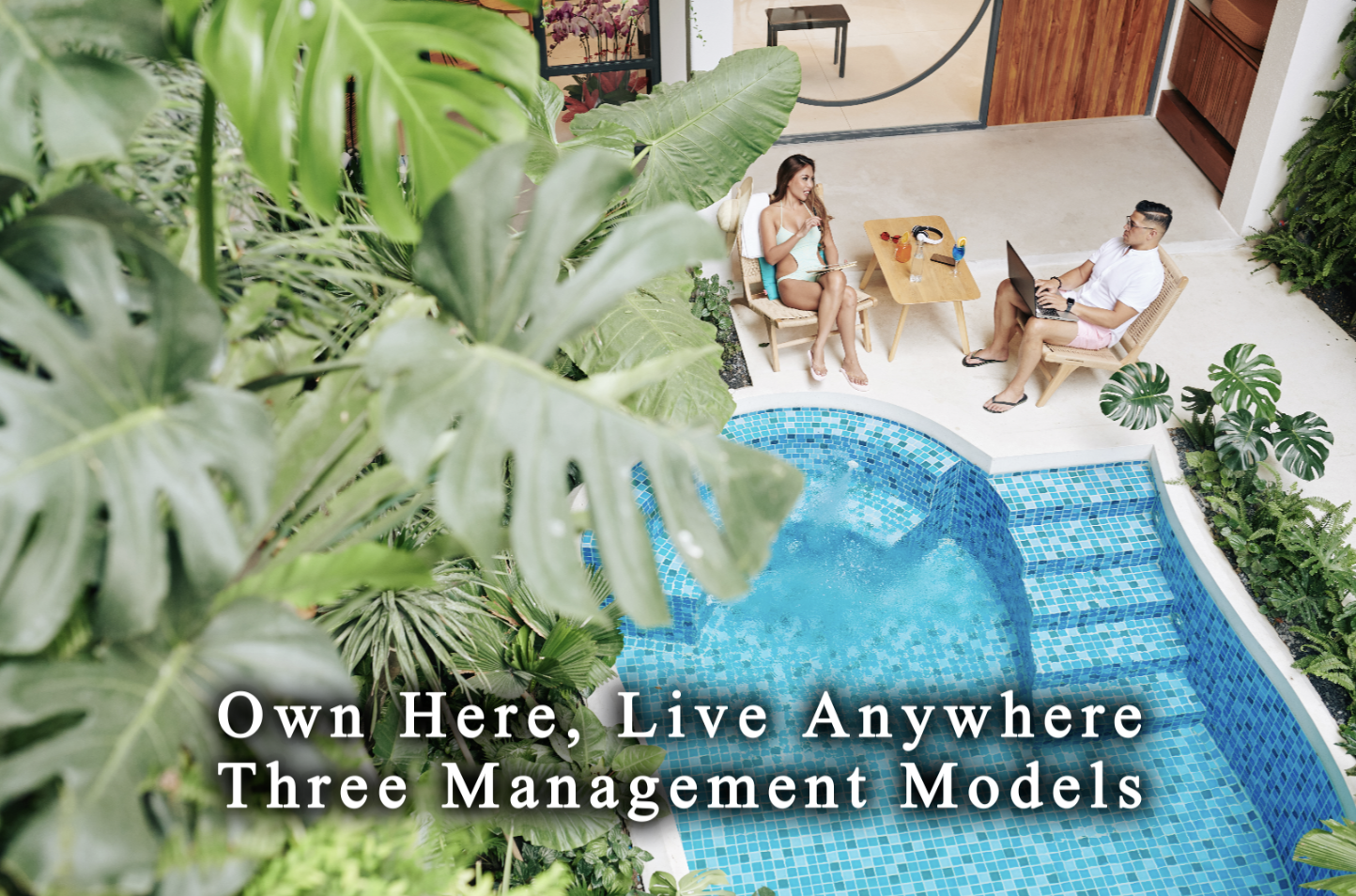
Most buying decisions are made on the property. Most ownership experiences are decided by who looks after it when you're not there. Here are the three management models on the North Coast, what each costs, and the risk that actually damages remote-owned properties — which isn't theft.
Quick Answers
Who looks after my property when I'm not in the country?
Three models exist on the North Coast: community management included in or alongside HOA fees, independent property managers, and in-house rental programmes run by larger communities.
Which is available depends entirely on where you buy, and it is worth checking before purchase rather than after — some communities solve this completely, and some leave it entirely to you.
What does community 'lock up and leave' management actually cover?
In communities that offer it, the management team pays utility bills, coordinates housekeeping, handles yard and pool service and manages general maintenance monthly — whether the owner is in residence or abroad.
This is one of the genuinely strongest features available to part-time owners and snowbirds, and it exists in some corridor communities and not others.
What do independent property managers charge?
Rental management typically runs 15–25% of gross rental income. Non-rental caretaking is usually a flat monthly fee that varies with property size and scope.
On a market-average Cabarete rental generating about $13,165 annually, a 20% fee is roughly $2,600 off the top — real money that must appear in any yield calculation.
How do in-house community rental programmes compare to independent managers?
Larger communities running their own programmes have on-site staff handling bookings, marketing, maintenance and guest turnover, and their own booking channels can improve occupancy in ways an individual listing struggles to match.
The trade-off is that fee structures for in-house programmes are frequently not published. Get the fee or owner split in writing and compare it directly against an independent manager's percentage before committing.
What's the biggest risk of owning remotely?
Not theft — it's slow deterioration nobody reports. Tropical climate, salt air and humidity work continuously on a closed, unoccupied property, and small problems that would be obvious to an occupant become expensive when discovered months later.
The properties that age well are the ones someone physically enters regularly, not just drives past.
What should a caretaking arrangement specifically include?
Interior inspection at a stated frequency, running water and air conditioning periodically, pool and garden service, utility bill payment, mail or notice collection, and a written protocol for what happens before and after a storm.
Ask specifically whether anyone goes inside. Perimeter security and grounds maintenance are not the same as someone opening the door.
Do communities with backup generators change the equation?
Meaningfully for remote owners. A community-wide generator covers grid outages without the owner buying, fuelling and maintaining equipment personally — and without an unoccupied property losing refrigeration or dehumidification during an extended outage.
Confirm whether the generator cost runs through the HOA or is billed separately, and what it actually covers.
What ongoing bills continue while I'm away?
HOA fees, electricity (reduced but rarely zero — refrigeration, dehumidification and pool pumps continue), water, internet if retained, insurance, and any caretaking or management fee.
Annual property tax applies only above roughly RD$10.7 million in appraised value — about US$170,000–$182,000 for 2026 — so many condos owe nothing there.
How do I handle bills and paperwork from another country?
Communities offering management typically pay utility bills on your behalf as part of the service. Otherwise, arrange direct debits where possible and give a trusted local representative limited authority to act.
A power of attorney can be scoped narrowly to specific administrative acts rather than granted broadly — worth discussing with your attorney.
What should I ask a manager before hiring them?
How many properties they manage, whether they enter the interior and how often, what their fee covers versus what is billed separately, how they report to owners, and what their storm protocol is.
Ask for references from current owner clients and actually contact them. In Cabarete alone, 81 management companies operate — the market is deep, and there is no reason to settle for the first one offered.
The question that determines whether ownership works
Most buying decisions on the North Coast are made on the property. Most ownership experiences are determined by something else entirely: who looks after it when you're not there. For a market where a large share of owners are part-time — snowbirds, seasonal residents, investors abroad — this is the difference between a property that stays excellent and one that quietly declines.
Three models exist here, and which is available to you depends on where you buy. That makes it a purchase-stage question, not a post-purchase one.
The three models
| Model | Typical cost | Best for | Watch for |
|---|---|---|---|
| Community "lock up and leave" management | Included or alongside HOA | Part-time owners, snowbirds | Only offered in some communities |
| Independent property manager | 15–25% of gross rental; flat fee for caretaking | Owners wanting choice and negotiating room | Depth of service varies enormously |
| Community in-house rental programme | Often unpublished — request in writing | Owners wanting passive rental income | Compare split against independent options |
Community management, where it exists, is the strongest option for a part-time owner: the team pays utility bills, coordinates housekeeping, handles yard and pool service, and manages general maintenance monthly whether you're in residence or abroad. Some corridor communities offer this comprehensively. Others offer security and grounds only, leaving everything inside your walls to you. The distinction is rarely obvious from a listing.
The risk that actually materialises
Owners worry about break-ins. Gated communities with 24/7 security, controlled access and camera coverage address that risk well, and it is not what damages most properties here.
What does is slow, unreported deterioration. Tropical humidity, salt air and heat work continuously on a closed, unoccupied home. Mould develops in sealed rooms. Seals perish. Salt corrodes fittings. A small leak that an occupant would notice in a day becomes structural over four months. Pool chemistry drifts. Appliances left idle in humid air fail.
The properties that age well are the ones somebody physically enters on a regular schedule — not the ones somebody drives past. When evaluating any caretaking arrangement, that is the question to ask directly: does anyone go inside, and how often? Perimeter patrol and grounds maintenance are valuable and are not the same thing.
What a proper caretaking scope looks like
- Interior inspection at a stated frequency, with written reporting
- Running water and air conditioning periodically to keep systems functioning and humidity down
- Pool and garden service on a schedule
- Utility bill payment and administrative handling
- Mail, notices and HOA correspondence collected
- A written protocol for before and after a storm — who secures the property, who inspects afterwards, who reports
Communities with backup generators are worth noting here. For a remote owner, a community-wide generator means grid outages don't leave an unoccupied property without refrigeration or dehumidification for days — and it removes the cost of buying, fuelling and maintaining equipment personally. Confirm whether the generator runs through the HOA or is billed separately, and what it actually powers.
What keeps costing money while you're away
HOA fees continue regardless. Electricity drops but rarely to zero — refrigeration, dehumidification and pool pumps run on. Water, internet if retained, insurance, and any management or caretaking fee all continue. Annual property tax applies only on appraised value above roughly RD$10.7 million (about US$170,000–$182,000 for 2026), so many condos owe nothing there.
For a rental property, add management at 15–25% of gross. On a Cabarete rental generating the tracked market average of about $13,165 annually, a 20% fee is roughly $2,600 — which has to appear in any honest yield calculation and frequently doesn't.
Choosing a manager in a deep market
In Cabarete alone, 81 management companies operate, handling roughly 737 tracked listings between them. That depth means you have genuine choice and no reason to accept the first arrangement offered.
Ask how many properties they manage and whether that number allows real attention to yours. Ask whether they enter the interior and at what frequency. Ask precisely what the fee covers and what arrives as a separate invoice. Ask how they report — photos, written reports, on what schedule. Ask their storm protocol. Then ask for references from current owner clients and actually contact them, ideally an owner who has been with them more than a year, because the second year is when service quality reveals itself.
Ask before you buy, not after:
- "Does this community offer management that goes inside the property, or only security and grounds?"
- "Is there an in-house rental programme, and what exactly is the fee or owner split, in writing?"
- "Is there a community backup generator, and does its cost run through the HOA?"
- "What do owners here actually do about caretaking — and can I speak to two of them?"
- "What is the written storm protocol for absent owners?"
Sources and further reading:
Management fee ranges and Cabarete management-company depth: Airbtics Cabarete management company analysis. Rental market averages: AirROI Cabarete STR market report. Community management models, generator provisions and service scopes reflect arrangements verified across Sosúa–Cabarete corridor communities during research. Tax thresholds verified against Dominican tax code provisions.
More from Blue Sail Realty: Sea Horse Ranch Guide · Casa Linda Guide · The Honest Guide to Buying Real Estate in the DR · The DR Safe-Buying Code · The Blue Sail Remote Closing Path · After-Purchase Support
About the author: James Oosterman, CIPS (Certified International Property Specialist), is Broker/CEO of Blue Sail Realty, headquartered in Cabarete on the Dominican Republic's North Coast. Read real client stories.
Change Currency
USD- USD
- EUR
- CAD
Change Measurement
square meters - m2- square feet - ft2
- square meters - m2
- acres - ac
- square yards - yd2
- hectares - ha
Our Listings
- Affordable Property(46)
- Condos(167)
- Land(10)
- Commercial(11)
- Luxury Property(131)
- Residential(90)
- Villas(147)
Featured Properties
 Luxury 3-Bedroom Oceanview Villa fo... $ 375,000
Seller Financing Available: Furnish... $ 349,000
Oceanside Luxury Villa, Cabarete — ... $ 385,000
Luxury 3-Bedroom Oceanview Villa fo... $ 375,000
Seller Financing Available: Furnish... $ 349,000
Oceanside Luxury Villa, Cabarete — ... $ 385,000-
Mortgage Calculator
-
Login
Register
A password will be e-mailed to you
Reset Password
Social Links: