
- Home
- Investor Briefs
- Hurricanes and Property Insurance in the Dominican Republic: The Real Numbers
Your search results
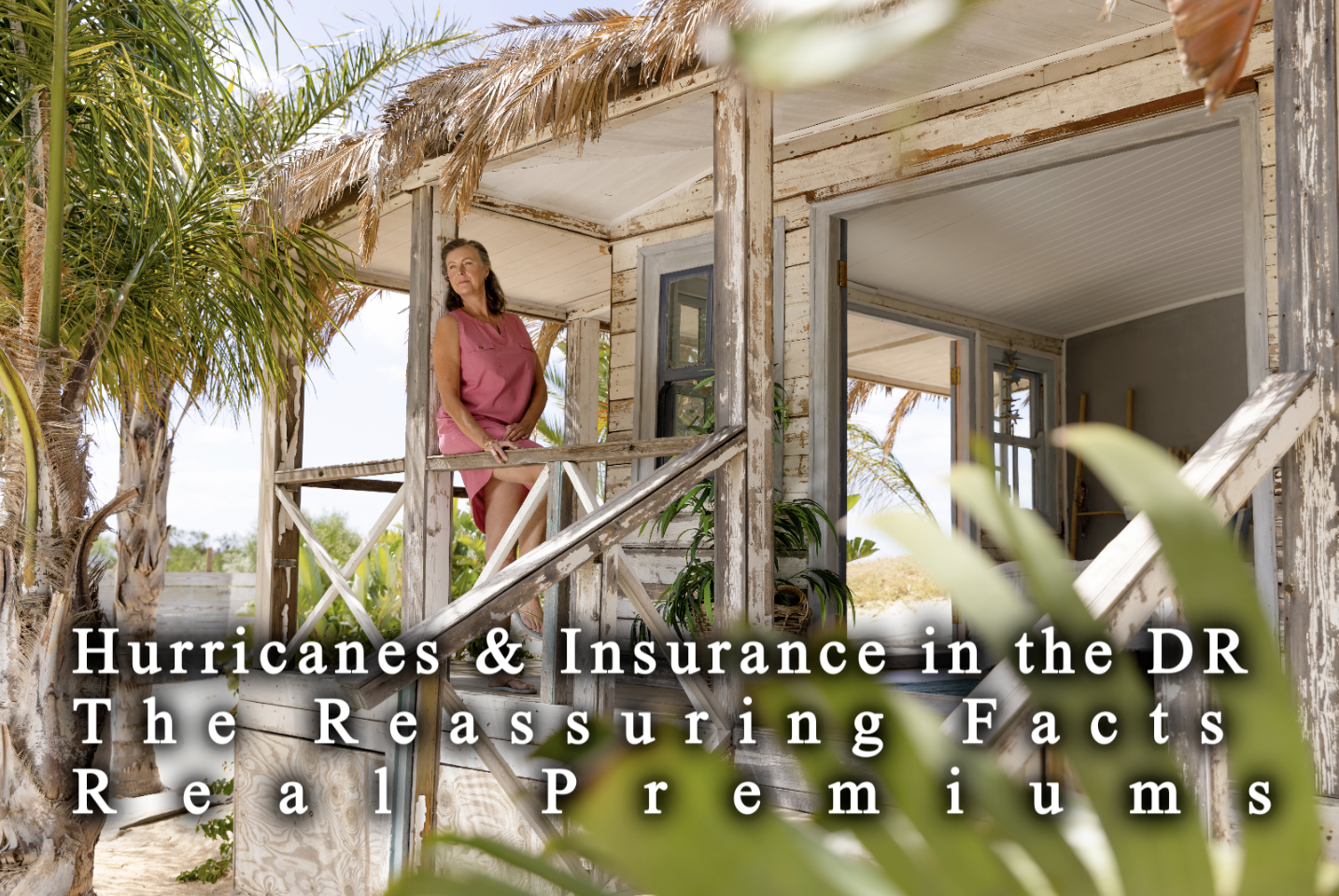
Hurricanes and Property Insurance in the Dominican Republic: The Real Numbers
Hurricane season runs June to November and the last major direct hit was 1998 — more than 25 years ago. Here's the honest risk picture, why elevation matters more than region, what insurance actually costs with real quoted premiums, and the deductible detail that determines your true exposure.
Quick Answers
Does the Dominican Republic actually get hit by hurricanes?
Hurricane season runs June through November, and the DR sits in an active basin — but direct major-hurricane strikes are less frequent than on many Caribbean islands. Hurricane Georges in 1998 was the last major direct hit, a gap of more than 25 years.
Recent storms illustrate the pattern: Fiona in 2022 was a Category 1 affecting the east, and Maria in 2017 passed to the northeast with indirect effects. The risk is real and manageable, not existential.
Why is the North Coast considered lower-risk than other parts of the DR?
The island's mountain ranges disrupt storm systems crossing it, and the North Coast sits on the sheltered side of that topography relative to the storm tracks that most often approach the region.
Risk is not uniform across the country — position within the island matters, and within a given area, elevation matters again. Hillside communities minutes from the beach carry no storm-surge exposure at all.
What does property insurance actually cost in the Dominican Republic?
A useful rule of thumb is roughly 0.8% of purchase price annually. Real quoted examples: a US$119,000 policy at approximately US$897 per year, and a US$239,000 home quoted around US$1,608 per year.
A long-term North Coast resident reports paying about $1,600 annually for a three-bedroom house including full contents cover — consistent with those figures.
What do Dominican property policies typically cover?
Comprehensive policies commonly include hurricane, cyclone and tornado damage, earthquake and tremor, flood and sea surge, fire and lightning, water damage, vandalism and theft, damage from vehicles or aircraft, and debris removal after a collapse.
Policies can be written in US dollars or Dominican pesos, and claims are paid in the policy's currency — which matters if you're funding repairs from abroad.
What deductible should I expect on hurricane coverage?
Typically 2% to 10% of the insured amount per event, with contents deductibles often around 10% of the loss subject to a minimum.
On a $300,000 insured value, a 2% deductible means $6,000 out of pocket before coverage responds. The deductible percentage matters more to your real exposure than the premium does.
Is insurance mandatory?
Not by law. Mortgage lenders require it where financing exists, and many HOAs mandate minimum coverage — but a cash buyer is under no legal obligation.
Some owners of solid concrete construction choose to go without. That is a genuine choice rather than negligence, but it becomes far less defensible on a rental property, where loss of rental income coverage exists precisely for this reason.
Do insurers actually pay claims here?
Most do, and the market has grown competitive — but claim disputes happen. One documented case following Hurricane Fiona in 2022 involved a denied claim that took months of court proceedings to resolve.
The practical protections: use a licensed broker rather than buying direct, read the exclusions before you need them, document your property's condition photographically at policy inception, and keep receipts for improvements.
Does construction type change my premium?
Substantially. Premiums are calculated largely on construction type, and the DR's prevalent solid concrete construction performs well against wind — which is part of why premiums here are lower than many buyers expect.
Coastal properties should carry corrosion-resistant materials, hurricane-rated windows and proper waterproofing. These add real build cost and directly affect both insurability and premium.
What should a rental-property owner insure that a homeowner doesn't?
Loss of rental income coverage, which responds when a property is uninhabitable after a covered event and bookings must be cancelled.
Also confirm the HOA carries insurance on common areas — a condo owner's policy typically covers the unit and contents, not the building envelope or shared facilities.
What should I do before hurricane season each year?
Confirm your policy is current and the insured value still matches replacement cost, photograph the property inside and out, secure or store outdoor furniture, service generators and check fuel, and confirm who will physically check the property if you are abroad.
Owners in communities with on-site management often have this handled. Owners of standalone properties should have a named person and a written arrangement, not an assumption.
The honest risk picture
Hurricane exposure is the question nearly every foreign buyer eventually asks about Caribbean property, and it deserves a straight answer rather than either dismissal or drama. The Dominican Republic sits in an active hurricane basin, with a season running June through November. It has also gone more than 25 years without a major direct hit — Hurricane Georges in 1998 was the last. Fiona in 2022 came ashore in the east as a Category 1; Maria in 2017 passed to the northeast with indirect effects.
Past patterns guarantee nothing. But the practical conclusion for a buyer is that this is manageable, insurable risk of the same character as buying in coastal Florida — not a reason to avoid the market, and not something to wave away either.
Why position matters more than region
Risk is not uniform across the island. The DR's mountain ranges disrupt systems crossing the country, and the North Coast benefits from that topography relative to the tracks storms most often take toward the region.
Within any area, elevation is the bigger variable. A hillside property five minutes from the beach has zero storm-surge exposure — the single most destructive mechanism in most Caribbean storm damage — while retaining ocean views. That structural advantage is available across the Sosúa–Cabarete corridor's hillside communities and is one of the least-discussed reasons buyers choose them. For genuine beachfront, surge exposure is real and the questions shift to construction standard, elevation above sea level, and what the building has already survived.
What insurance actually costs — with real numbers
| Insured value | Annual premium (quoted example) | Effective rate |
|---|---|---|
| US$119,000 | ~US$897 | ~0.75% |
| US$239,000 | ~US$1,608 | ~0.67% |
| 3BR house + contents (resident-reported) | ~US$1,600 | — |
| General rule of thumb | ~0.8% of purchase price | 0.8% |
These are notably lower than buyers arriving from Florida or the Gulf Coast expect, and the reason is construction. Premiums are calculated largely on construction type, and the DR builds predominantly in solid concrete, which performs well against wind. A concrete villa with hurricane-rated windows is a fundamentally different underwriting proposition from timber-frame construction.
The deductible is the number that matters
Hurricane coverage in Dominican policies typically carries a deductible of 2% to 10% of the insured amount per event, with contents deductibles often around 10% of the loss subject to a stated minimum. This is where real exposure lives. On a $300,000 insured value, a 2% deductible means the first $6,000 of any storm loss is yours; at 10%, it's $30,000.
Two policies with similar premiums can differ enormously here, and the cheaper premium is frequently the one with the worse deductible. Ask for the deductible structure in writing before comparing prices.
What's covered, and in which currency
Comprehensive Dominican policies commonly include hurricane, cyclone and tornado damage; earthquake and ground tremor; flood and sea surge; fire, lightning and explosion; accidental water damage; vandalism, riot and theft; damage from vehicles or aircraft; and removal of debris after a collapse. Earthquake coverage matters more here than buyers realise — the North Coast sits near a tectonically active zone and minor tremors are a normal occurrence.
A practical detail worth knowing: policies can be written in US dollars or Dominican pesos, and claims pay out in the policy's currency. If you'll be funding repairs with dollars from abroad, a dollar policy removes exchange-rate risk at exactly the moment you can least absorb it.
The part nobody advertises: claims
The Dominican insurance market has grown and become more competitive, and most claims are paid. But disputes occur — one documented case following Fiona in 2022 involved a denied claim that required months of court proceedings to resolve.
The protections are unglamorous and effective. Use a licensed broker rather than buying direct, so someone with market relationships advocates for you. Read the exclusions before you need them, not after. Photograph the property comprehensively at policy inception and keep the images dated. Keep receipts for every improvement — they establish replacement value. And confirm your insured value still reflects replacement cost annually, because underinsurance is the most common reason a paid claim still leaves an owner short.
If you rent the property
Two additions matter. Loss of rental income coverage responds when a covered event makes the property uninhabitable and bookings must be cancelled — the actual financial damage for an investment property is often the lost season, not the repair. And for condo owners, confirm the HOA carries adequate insurance on common areas and the building envelope; your unit policy typically stops at your walls.
Questions to ask before insuring a Dominican property:
- "What is the hurricane deductible — 2% or 10% — and of what figure?"
- "Is the policy in US dollars or pesos, and in which currency are claims paid?"
- "Is the insured value replacement cost, or actual cash value?"
- "Does the HOA carry coverage on common areas and the building envelope?"
- "If I rent the property, is loss of rental income included?"
- "Who physically checks and secures the property if I'm abroad when a storm approaches?"
Sources and further reading:
Premium examples, coverage scope, deductible structures and policy currency: Hernández Peguero Insurance Brokers, DR homeowners insurance guide and Hernández Peguero on Dominican property insurance. Coverage categories and North Coast seismic context: Insurance Sosúa and Canablue on Dominican insurance. Resident-reported premiums and claims experience drawn from Expat.com Dominican Republic home insurance discussion. Storm history compiled from public hurricane records. This article is general information, not insurance advice — consult a licensed Dominican broker.
More from Blue Sail Realty: Sea Horse Ranch Guide · Casa Linda Guide · The Honest Guide to Buying Real Estate in the DR · The DR Safe-Buying Code · The Blue Sail Remote Closing Path · After-Purchase Support
About the author: James Oosterman, CIPS (Certified International Property Specialist), is Broker/CEO of Blue Sail Realty, headquartered in Cabarete on the Dominican Republic's North Coast. Read real client stories.
Change Currency
USD- USD
- EUR
- CAD
Change Measurement
square meters - m2- square feet - ft2
- square meters - m2
- acres - ac
- square yards - yd2
- hectares - ha
Our Listings
- Affordable Property(46)
- Condos(167)
- Land(10)
- Commercial(11)
- Luxury Property(131)
- Residential(90)
- Villas(147)
Featured Properties
 Luxury 3-Bedroom Oceanview Villa fo... $ 375,000
Seller Financing Available: Furnish... $ 349,000
Oceanside Luxury Villa, Cabarete — ... $ 385,000
Luxury 3-Bedroom Oceanview Villa fo... $ 375,000
Seller Financing Available: Furnish... $ 349,000
Oceanside Luxury Villa, Cabarete — ... $ 385,000-
Mortgage Calculator
-
Login
Register
A password will be e-mailed to you
Reset Password
Social Links: