
- Home
- Investor Briefs
- Moving Money for a Dominican Property Purchase: The Complete Guide to Transfers, Currency, Documentation, and Getting Funds to Closing Cleanly
Your search results
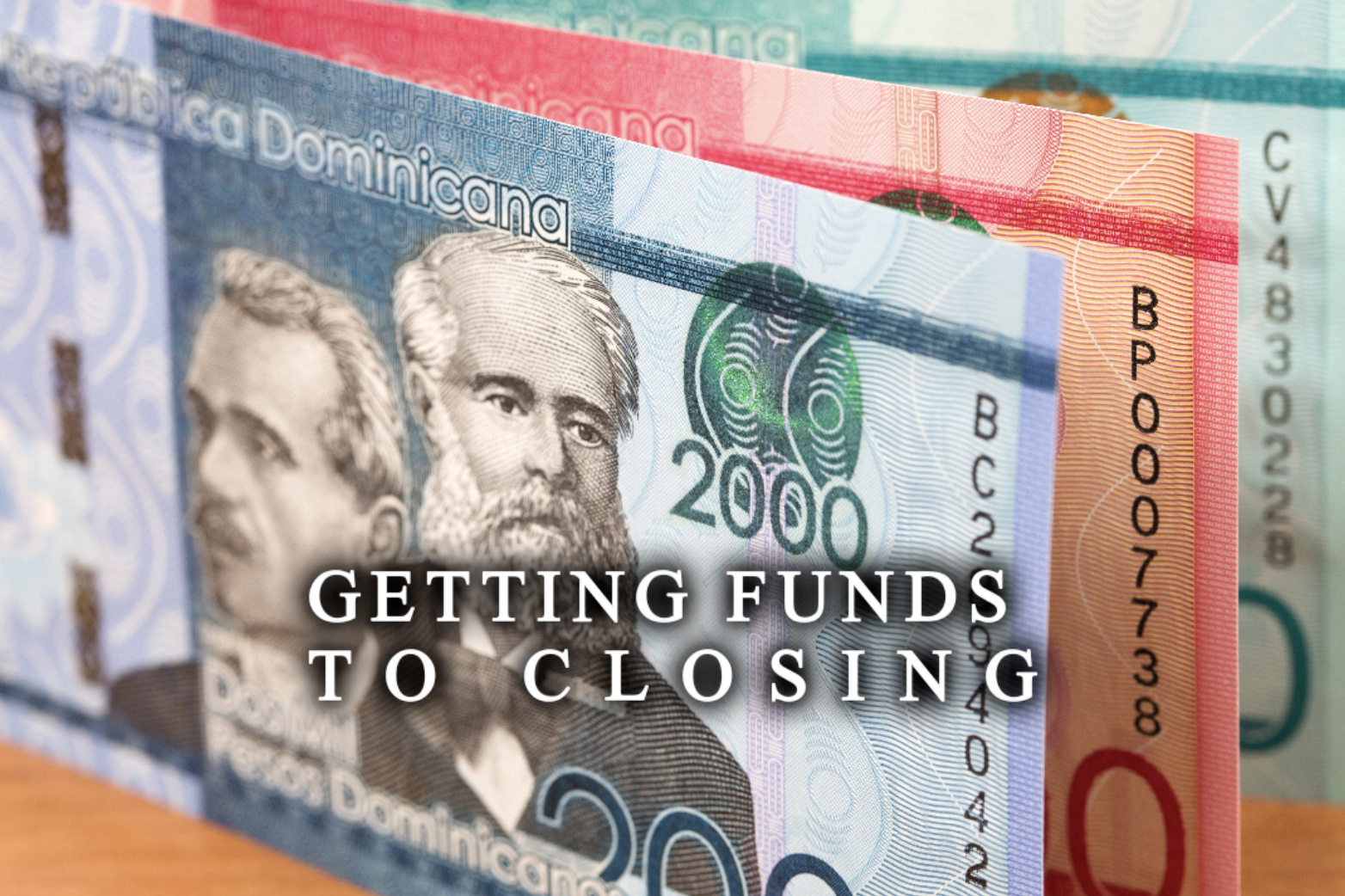
Moving Money for a Dominican Property Purchase: The Complete Guide to Transfers, Currency, Documentation, and Getting Funds to Closing Cleanly
Buyers spend months choosing a property and often think about how the money will actually get there in the final fortnight, which is exactly the wrong order. Here's the real picture: how funds reach a Dominican closing, why two currencies matter, and the documentation worth assembling before you transfer anything.
Quick Answers
How do I transfer money to buy property in the Dominican Republic?
By international wire, from an account in your own name, to the account specified in your purchase agreement — normally your attorney's client account or an agreed escrow arrangement.
The mechanism is ordinary. What matters is that the receiving account is named in the contract, verified independently, and that the transfer originates from an account clearly in your name.
Should I pay in US dollars or Dominican pesos?
North Coast property transactions are conventionally priced and paid in US dollars. Taxes and official thresholds are denominated in pesos.
So both currencies matter, just in different places. Your price is a dollar figure; your IPI liability is calculated against a peso threshold.
Do I need a Dominican bank account to buy?
No. A purchase can be completed without opening a local account, with funds moving from your home bank to the account named in the agreement.
Opening a local account is generally more relevant once you own — for utilities, community fees and ongoing costs — and typically involves more documentation than a purchase does.
Should funds go through my attorney?
Through your attorney's client account or an agreed escrow arrangement named in the purchase agreement — not directly to a seller or an agent on the strength of an email.
This is the single most important control in the whole process, and it costs nothing to insist on.
What documentation should I prepare?
Evidence of where the money came from: sale proceeds, a refinance or equity release, investment liquidation, business proceeds, inheritance, or accumulated savings with statement history.
Assemble it before you need it. Banks on both ends may ask, and a buyer with a clear paper trail moves through that in days rather than weeks.
Why does the exchange rate matter if I'm paying in dollars?
Because the annual IPI property tax threshold is set in Dominican pesos — RD$10,695,494 for 2026 — so its dollar equivalent moves with the rate.
At current levels that is approximately US$182,000. A property near the threshold can sit above or below it depending on the rate and the appraisal.
Should I ever pay any part in cash?
No. Every payment in a property transaction should be traceable, documented and routed through the banking system.
A traceable trail protects you, satisfies compliance requirements on both ends, and gives you clean records for any future resale and capital gains calculation.
How long do transfers take?
International wires are typically a matter of days rather than weeks, but compliance review on either end can extend that.
Build the buffer into your timeline rather than discovering it on the closing date. Sending a small test transfer first is a sensible habit.
What about the 3% transfer tax — how is that paid?
Through your attorney as part of the closing process, calculated on the higher of the DGII appraised value or your declared purchase price.
On the North Coast sale prices typically exceed cadastral valuations, so in practice it is assessed on what you actually paid.
What is the most common avoidable problem?
Paying to an account that was never named in the contract, usually on the strength of a revised email instruction.
Verify any change to payment instructions by voice with your attorney, using a number you already had, before sending anything. Confirmed instructions do not change by email.
How Funds Actually Reach a Dominican Closing
The path: Your home bank, by international wire, to the account named in your purchase agreement — normally your attorney's client account or an agreed escrow arrangement — and from there to the seller, the tax authority and the registry as the transaction completes.
The mechanics are unremarkable. What makes a transfer clean is the surrounding discipline: the receiving account is specified in the contract you signed, it belongs to a party with a professional obligation to you, and the funds leave an account clearly in your own name.
Two points follow from that. First, the account should be named in the purchase agreement rather than communicated separately, because a detail in a contract is considerably harder to alter than one in an inbox. Second, funds arriving from an account in a different name than the buyer's create genuine friction on the Dominican side — where a family member or company is genuinely providing the funds, that relationship needs documenting in advance rather than explaining afterwards.
Why Two Currencies Both Matter
North Coast property is conventionally priced and paid in US dollars. Dominican tax thresholds and official figures are denominated in pesos. Neither fact causes any difficulty; not knowing both does.
| Element | Currency | Why it matters |
|---|---|---|
| Purchase price | USD | Conventional for North Coast transactions |
| 3% ITBI transfer tax | Assessed on value, paid locally | Calculated on the higher of DGII appraisal or sale price |
| Annual IPI threshold | RD$10,695,494 (2026) | Its USD equivalent moves with the exchange rate |
| Community fees and utilities | Usually a mix | Ongoing costs after purchase |
| Capital gains on resale | Assessed on the gain | Flat 10% since Law 30-26, June 2026 |
The threshold point is the practical one. IPI applies at 1% only to appraised value above RD$10,695,494 — approximately US$182,000 at current levels — and that threshold is adjusted annually for inflation. A property appraised comfortably below it owes nothing at all. A property sitting close to it can fall either side depending on the appraisal and the rate, which is worth knowing before you assume a holding cost of zero.
The Documentation Worth Assembling Early
Compliance requirements exist on both ends of an international transfer, and they are entirely manageable for a buyer who has prepared. The buyers who find this stage frustrating are almost always the ones who started assembling paperwork after a bank asked for it.
1. Source of funds
Where the money came from, with evidence. Proceeds from a property sale, a refinance or equity release, an investment liquidation, business proceeds, inheritance, or savings with statement history. Documents rather than explanations.
2. Identity and address
Passport, and proof of residential address in the form your bank recognises. Straightforward, but worth having current rather than expired.
3. The purchase agreement itself
A signed promise of sale naming the property, the price and the receiving account gives your bank a clear commercial reason for the transfer, which materially smooths compliance review.
4. Records for later
Keep everything. When you eventually sell, capital gains is calculated on the gain — the difference between acquisition cost and sale value — so documentation of your purchase price, closing costs and subsequent capital improvements directly reduces the taxable base. Reconstructing that years later is considerably harder than filing it now.
The One Fraud Pattern to Guard Against
It is worth naming specifically because it is the only common way buyers lose money at this stage, and it is entirely preventable.
The pattern is a revised payment instruction arriving by email, apparently from a party in the transaction, changing the receiving account shortly before a transfer. It looks routine. It is the single most common form of property-transaction fraud worldwide, and it works because it arrives at a moment when the buyer is expecting instructions.
The defence is simple and absolute. Confirm any change to payment details by voice, with your attorney, using a phone number you already had before the change arrived. Never a number contained in the new instruction. Confirmed banking instructions in a signed contract do not change by email, and a genuine change will survive a phone call without difficulty.
Your attorney should also confirm, independently, that the receiving account belongs to who it purports to belong to.
A Sensible Sequence
| Stage | Action |
|---|---|
| Before choosing a property | Establish where funds will come from and start the paper trail |
| On engaging your attorney | Confirm the receiving account and that it will be named in the agreement |
| At promise of sale | Ensure banking details appear in the signed contract |
| Before the main transfer | Send a small test transfer and confirm receipt by voice |
| Main transfer | From an account in your own name, with the agreement available for your bank |
| At closing | 3% ITBI paid and transfer registered through your attorney |
| After closing | Archive every document for future capital gains calculation |
Buyers who follow that order find this the least eventful part of the purchase. Buyers who reverse it — choosing a property, agreeing a date, then working out the money — are the ones for whom timelines slip.
Questions worth asking before transferring any funds:
- "Is the receiving account named in my signed purchase agreement?"
- "Whose account is it, and has my attorney independently verified it?"
- "Am I sending from an account clearly in my own name?"
- "What source-of-funds documentation will be required, and do I have it?"
- "Can I send a small test transfer first and confirm receipt by voice?"
- "If payment instructions change, what number do I call to verify?"
- "How is the 3% transfer tax paid, and by whom?"
- "Where will my property sit relative to the peso-denominated IPI threshold?"
Sources and further reading:
The 2026 IPI exemption threshold of RD$10,695,494 (approximately US$182,000 at current exchange levels, adjusted annually for inflation), the 3% ITBI transfer tax and its assessment on the higher of DGII appraised value or declared purchase price verified against Dominican tax code provisions and DGII published rates. The flat 10% capital gains rate on individual real estate transfers follows Law 30-26, enacted 18 June 2026. Descriptions of transfer mechanics, currency convention on the North Coast and documentation practice reflect Blue Sail Realty's transaction experience; requirements vary by bank, jurisdiction and individual circumstance. This article is provided for general informational purposes only and does not constitute legal, tax or financial advice — confirm transfer arrangements with your own bank and an independent Dominican attorney, and verify any change to payment instructions by voice before acting on it.
More from Blue Sail Realty: Do I Need a Lawyer · Closing Costs and Property Taxes · How Much a House Costs · The Cheapest Way to Buy Property · Cabarete Real Estate Guide · The DR Safe-Buying Code
About the author: James Oosterman, CIPS (Certified International Property Specialist), is Broker/CEO of Blue Sail Realty, headquartered in Cabarete on the Dominican Republic's North Coast, with nearly 20 years of experience and a 5.0 Google rating. Read real client stories.
Want to see Blue Sail Realty first next time you search? Add us as a preferred source on Google.
Change Currency
USD- USD
- EUR
- CAD
Change Measurement
square meters - m2- square feet - ft2
- square meters - m2
- acres - ac
- square yards - yd2
- hectares - ha
Our Listings
- Affordable Property(46)
- Condos(167)
- Land(10)
- Commercial(11)
- Luxury Property(131)
- Residential(90)
- Villas(147)
Featured Properties
 Luxury 3-Bedroom Oceanview Villa fo... $ 375,000
Seller Financing Available: Furnish... $ 349,000
Oceanside Luxury Villa, Cabarete — ... $ 385,000
Luxury 3-Bedroom Oceanview Villa fo... $ 375,000
Seller Financing Available: Furnish... $ 349,000
Oceanside Luxury Villa, Cabarete — ... $ 385,000-
Mortgage Calculator
-
Login
Register
A password will be e-mailed to you
Reset Password
Social Links: