- Home
- Investor Briefs
- The Cheapest Way to Buy Property in the Dominican Republic
Your search results
The Cheapest Way to Buy Property in the Dominican Republic
Searches for cheap Dominican property are among the most common in this market — and most answers give you a price without the three costs underneath it. Here is the real entry ladder, and the fee gap that can cost $92,000 over ten years.
Quick Answers
What is the cheapest way to buy property in the Dominican Republic?
Land. Hillside ocean-view building lots between Sosúa and Cabarete run roughly $60–$100 per square metre, with carrying costs as low as $35 per month in some communities and no annual property tax on most individual parcels.
That is genuinely the lowest-cost entry into this market, and it lets you hold a position while deciding what to build.
What is the cheapest built property?
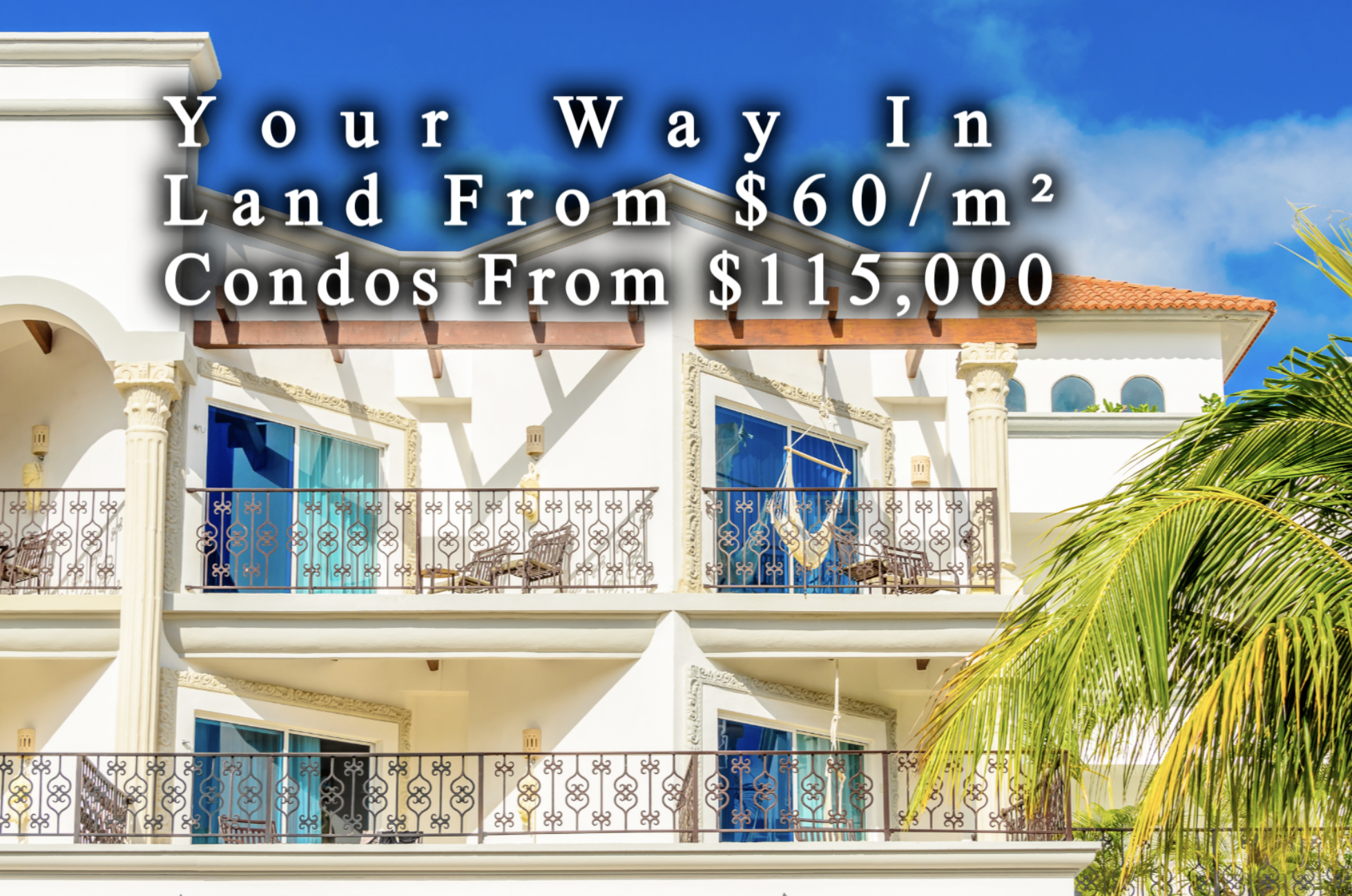
Oceanview studios and one-bedroom units in large resort-style communities start from around $115,000, with true beachfront one-bedrooms from roughly $175,000.
Below $115,000 you are generally looking at inland property, older stock needing work, or units in less established locations.
Are there hidden costs that erase the saving?
Three that catch people out: closing costs of 4.5–8%, HOA fees that vary from $35 to over $900 monthly depending on the community, and furnishing at $15,000–$30,000 for a full property.
A cheap purchase price in a high-fee community can cost more over ten years than a higher purchase price in a low-fee one.
Do cheap properties owe annual property tax?
Usually not. Annual property tax (IPI) is 1% but applies only above roughly RD$10.7 million in appraised value — about US$170,000–$182,000 for 2026 — so a large share of entry-level Dominican property owes nothing.
That threshold is one of the genuine advantages of buying at the lower end here.
Is buying cheap in the Dominican Republic risky?
The risks are specific and manageable: unregistered title, missing deslinde, unresolved inheritance, and properties without legal road access.
Every one of those is found by an independent attorney before you pay. The Dominican system protects you well — it just requires you to use it.
What about CONFOTUR on lower-priced property?
It applies to qualifying new construction regardless of price, and can waive the 3% transfer tax plus up to 15 years of annual property tax.
On an entry-level purchase that transfer-tax waiver is proportionally more significant than it is on a luxury one.
Can I finance a cheaper property?
Dominican banks rarely finance foreign buyers at any price point. Seller and developer financing exist and are negotiated deal by deal rather than published.
Documented examples on this coast include 50% seller financing over 5 years at 6%, and developer financing around 5% fixed with terms up to 30 years in certain communities.
Which areas offer the best value?
Puerto Plata city and the hills behind the Sosúa–Cabarete corridor consistently price below the beach-town centres for equivalent space, because they sit outside the expat-branded areas.
The southwest around Barahona is cheaper still, though genuinely early-stage with unproven demand and thin services.
What is the cheapest mistake to avoid?
Buying inland to save money and then discovering you drive twenty minutes for everything and cannot rent it.
The saving on an inland property is real. So is the daily cost of the location. Rent in an area for a season before committing to a cheap version of it.
What is the honest cheapest sensible entry?
A hillside ocean-view lot at $60–$100 per square metre if you have time and want to build, or an oceanview studio from around $115,000 in an established community if you want something usable now.
Both are genuine entry points with clean title, real infrastructure and an eventual resale market — which is the part that matters more than the headline price.
What "cheap" actually costs here
Searches for cheap Dominican property are among the most common in this market, and most of the results answer the wrong question. The headline price is the smallest part of what you will pay.
Here is the real entry ladder, and then the costs that sit underneath it.
| Entry point | Price | Carrying cost |
|---|---|---|
| Hillside ocean-view building lot | $60–$100 per m² | From ~$35/month; most owe no property tax |
| Oceanview studio / 1BR, resort community | from ~$115,000 | HOA from ~$270/month |
| True beachfront 1BR | from ~$175,000 | Varies by building |
| 2–3 bedroom condo | $200,000–$400,000 | ~$270–$480/month |
| Villa, established community | from ~$250,000 | ~$330/month upward |
The three costs that erase a saving
1Closing costs of 4.5–8%
Dominated by the 3% property transfer tax on appraised value, plus legal and registry fees. On a $115,000 purchase that is roughly $5,000–$9,000 on top of the price. CONFOTUR can waive the transfer tax entirely on qualifying new construction — worth asking about, because proportionally it matters more at the lower end.
2HOA fees ranging from $35 to $925 a month
This is where cheap purchases go wrong. The gap between a $35 monthly fee and an $800 one is roughly $92,000 over ten years — considerably more than the price difference between many properties buyers agonise over. A $115,000 condo in a high-fee building can cost more over a decade than a $175,000 one in a low-fee community.
3Furnishing at $15,000–$30,000
For a full apartment or house, and the variable is not size — it is whether you buy locally or import. Local craftsmanship is genuinely cheap here; imports carry duties plus 18% ITBIS. Choosing imported over local adds roughly $5,000–$8,000 at every property size.
The tax threshold that helps at this end
Annual property tax (IPI) is 1%, but only on appraised value above roughly RD$10.7 million — about US$170,000 to $182,000 for 2026, adjusted annually.
Which means most entry-level Dominican property owes zero annual property tax. That is a genuine structural advantage of buying at the lower end here, and it does not exist in most comparable markets.
Where value actually sits
The hills behind Sosúa and Cabarete. Ocean-view lots from $60 per square metre, fees from $35 a month, and a constant trade wind that measurably reduces air-conditioning costs. You will need a car.
Puerto Plata city. Consistently below the beach towns twenty minutes east for equivalent space, because it sits outside the expat-branded corridor. It has its own international airport, a hospital, and genuine city amenities.
The southwest around Barahona. Cheaper again, and genuinely early-stage — unproven rental demand, thin services, limited resale liquidity. Suits patient capital, not a first purchase.
The risks specific to buying cheap
They are real, specific, and every one of them is findable before you pay:
- Unregistered title. Some rural and lower-priced property is held by possession rather than a registered Certificate of Title. Never proceed without your own attorney confirming registered title.
- No deslinde. The judge-approved boundary survey is legally required before any sale. On land it is the entire transaction.
- Unresolved inheritance. Common on older and family-held property, and it can stall a closing for months.
- No legal road access. A cheap parcel you cannot legally reach is not cheap.
The Dominican Republic runs a Torrens registered-title system where the state guarantees registered ownership. It protects buyers well. It protects them only if they use it.
The mistake that costs most
Buying inland to save money, then discovering the daily reality: twenty minutes to groceries, twenty minutes back, every day — and a property that rents poorly because visitors want to be near the water.
The saving is real. So is the cost of the location, paid daily for as long as you own it.
Rent in the area for a season first. Mid-tier one-bedrooms run roughly $700–$1,200 monthly. On a six-figure decision it is the cheapest insurance available, and it is the single piece of advice that prevents the most expensive mistakes at this end of the market.
Questions on any low-priced Dominican property:
- "Is the title registered and the deslinde complete — verified by my own attorney?"
- "What is the monthly fee, and what does it include?" (run it over ten years)
- "Does this property owe annual property tax, or is it under the threshold?"
- "Does it carry CONFOTUR, and how many exemption years remain?"
- "Is there legal road access, in writing?"
- "What will it cost to furnish, and can I buy locally?"
- "Have I spent time here outside high season?"
Sources and further reading:
Pricing tiers, HOA ranges and land costs reflect current North Coast listings verified during research. IPI thresholds, transfer tax and ITBIS rates verified against Dominican tax code provisions. CONFOTUR framework and Torrens title requirements verified against published Dominican legal guidance. Furnishing cost ranges reflect current local and imported pricing on the North Coast. This article is general information, not legal or tax advice.
More from Blue Sail Realty: Buying Property Legally · Retiring in the DR · Cost of Living in Cabarete · Cabarete vs Sosúa · The DR Safe-Buying Code · All North Coast Guides
Explore every Blue Sail guide: North Coast Guides — everything on buying, owning and living here, in one place
📞 +1 (849) 283-4906 · ✉️ James@bluesailrealty.com
📍 Blue Sail Realty on Google — 113 Main Street, Cabarete, Puerto Plata
About the author: James Oosterman, CIPS (Certified International Property Specialist), is Broker/CEO of Blue Sail Realty, headquartered in Cabarete on the Dominican Republic's North Coast. Read real client stories.
Change Currency
USD- USD
- EUR
- CAD
Change Measurement
square meters - m2- square feet - ft2
- square meters - m2
- acres - ac
- square yards - yd2
- hectares - ha
Our Listings
- Affordable Property(46)
- Condos(167)
- Land(10)
- Commercial(11)
- Luxury Property(131)
- Residential(90)
- Villas(147)
Featured Properties
 Luxury 3-Bedroom Oceanview Villa fo... $ 375,000
Seller Financing Available: Furnish... $ 349,000
Oceanside Luxury Villa, Cabarete — ... $ 385,000
Luxury 3-Bedroom Oceanview Villa fo... $ 375,000
Seller Financing Available: Furnish... $ 349,000
Oceanside Luxury Villa, Cabarete — ... $ 385,000-
Mortgage Calculator
-
Login
Register
A password will be e-mailed to you
Reset Password
Social Links: