- Home
- Investor Briefs
- Record Foreign Investment in the Dominican Republic: What It Means for Real Estate Buyers in 2026
Your search results
Record Foreign Investment in the Dominican Republic: What It Means for Real Estate Buyers in 2026
The Dominican Republic pulled in $1.54 billion in foreign direct investment in the first quarter of 2026 alone, up 6.4% from a year earlier, with the Central Bank projecting roughly $5.2 billion for the full year. Real estate development captured about 14.8% of that — real money, not just sentiment, backing the growth story buyers keep hearing about.
Quick Answers
How much foreign investment did the Dominican Republic receive in 2026?
$1.54 billion in Q1 2026 alone, up 6.4% year-over-year, with $5.2 billion projected for the full year.
About $1.05 billion of the Q1 total came as new capital contributions rather than reinvested earnings — genuinely new money, not existing investments compounding.
What percentage of foreign investment goes into real estate?
About 14.8% of Q1 2026 FDI, roughly $228 million, went into real estate development.
That puts real estate fourth behind tourism (22.5%), energy (22.2%), and mining (17.8%).
Which sectors are driving the Dominican Republic's investment growth?
Tourism and energy together account for nearly 45% of Q1 2026 inflows.
The Central Bank credits social and political stability, legal certainty, tax incentives, modern infrastructure, and active government support as the underlying drivers.
Is Dominican Republic tourism revenue growing in 2026?
Yes — up 20.2% year-over-year to $3.90 billion in the same period.
Since tourism demand drives much of the vacation-rental and second-home market here, this growth rate is directly relevant to buyers evaluating rental income potential.
What does record foreign investment mean for property buyers?
It generally supports continued price appreciation and more competition for well-located inventory.
Waiting rarely produces a lower price in an actively growing market — but that's a reason to move deliberately, not to rush a decision.
Is now a good time to buy real estate in the Dominican Republic?
Record investment figures describe a healthy market, not a signal to rush any specific purchase.
Market-level data should inform your timeline and expectations, not replace property-specific due diligence and a realistic look at your own numbers.
What's driving investor confidence in the Dominican Republic?
Stability, legal certainty, tax incentives like CONFOTUR, infrastructure, and strong export and tourism performance.
These are the Central Bank's own stated fundamentals behind continued inflows.
How does the Dominican Republic's FDI growth compare to prior years?
Q1 2026's $1.54 billion is up 6.4% over Q1 2025, adding about $92.2 million in a single quarter.
It builds on a multi-year growth trend, alongside a 91.4% surge in gold exports and a 17.5% rise in total exports over the same period.
The News: A Record Start to 2026
The Dominican Republic's Central Bank reported $1.54 billion in foreign direct investment for the first quarter of 2026, a 6.4% increase over the same period in 2025 — an addition of roughly $92.2 million in new inflows in just three months. Of that total, approximately $1.05 billion arrived as new capital contributions from international investors, rather than profits being reinvested from existing operations, which is the more meaningful figure: it reflects genuinely new money choosing the Dominican Republic over other destinations, not existing investors simply staying put.
The Central Bank is now projecting roughly $5.2 billion in foreign direct investment for the full 2026 calendar year. If that projection holds, it would mark one of the strongest years on record for the country.
In the Central Bank's own words: the sustained inflows reflect "solid internal fundamentals, including sustained social peace, economic and political stability, legal certainty, tax incentives, modern infrastructure, advanced telecommunications, and active government support."
Where the Money Is Going
Real estate development wasn't the single largest recipient of Q1 2026 investment, but it wasn't far off, and the sector breakdown tells its own story about what's fueling the country's growth right now.
| Sector | Share of Q1 2026 FDI | Approximate Amount |
|---|---|---|
| Tourism | 22.5% | $347 million |
| Energy | 22.2% | $342 million |
| Mining | 17.8% | $274 million |
| Real Estate Development | 14.8% | $228 million |
| All other sectors combined | 22.7% | $350 million |
Tourism and energy together account for nearly 45% of all inflows, and it's worth noting these two sectors aren't independent of real estate: tourism growth drives vacation-rental and second-home demand directly, while energy investment (including renewable infrastructure) supports the reliability of power in the resort corridors where much of the country's foreign-buyer real estate activity is concentrated.
Tourism Revenue Is Growing Faster Than Investment Itself
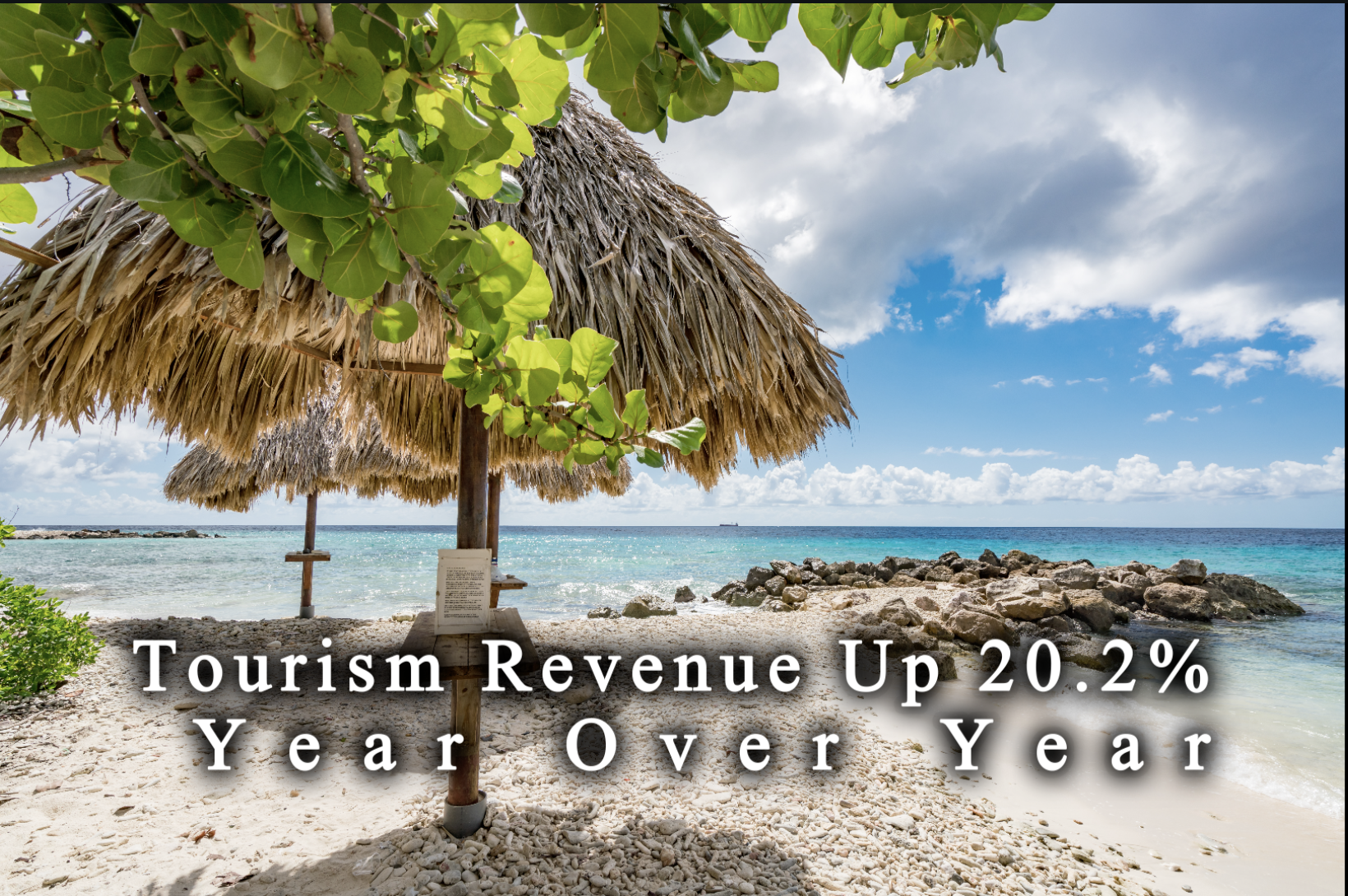
Tourism revenue rose 20.2% year-over-year to $3.90 billion (RD$230.1 billion) in the same period — a growth rate well ahead of overall FDI growth, and one of the more telling numbers in this data set for real estate buyers specifically. Revenue growth of this magnitude reflects actual visitor spending on the ground, not just capital commitments on paper, and it's visitor volume and spending that ultimately determines occupancy and nightly rates for short-term rental owners across the country.
This growth also came alongside broader export strength: total exports rose 17.5% to $4.19 billion (RD$247.2 billion), free zone exports grew 4.6% to $2.07 billion (RD$122.1 billion), and gold exports specifically surged 91.4% to $738.1 million (RD$43.5 billion). None of these are real estate figures directly, but they paint a picture of an economy growing across multiple sectors at once, rather than a single overheated segment.
What This Actually Means If You're Buying
It's tempting to read a headline like "record foreign investment" as a straightforward buy signal, and in one narrow sense it is: sustained investment growth at this scale generally supports continued price appreciation and new development, and a market attracting this much new capital is unlikely to see prices retreat in the near term. That's genuinely useful context if you've been waiting for a dip that market fundamentals don't currently support.
But the honest version of this story is more measured than the headline. Record investment figures describe the health of a market, not the merits of any specific property. A well-funded, growing economy doesn't protect a buyer from an undone deslinde, an unreliable pre-construction developer, or a rental yield that looks better on paper than it performs after real costs — those are property-level risks that macro data can't resolve, and they matter more to your actual outcome than which quarter FDI hit a new high.
Before treating "record investment" as a reason to move fast:
- Confirm this specific property's title and history independently — sector-level growth doesn't vouch for one seller.
- Run your own realistic net-return numbers rather than relying on a gross yield or a market-growth headline.
- Remember competition for well-located inventory is real, but urgency is not the same as due diligence — don't let the two get confused.
The Bigger Picture: A Full-Year Outlook of $5.2 Billion
If the Central Bank's $5.2 billion full-year projection holds, 2026 will extend a multi-year run of rising foreign investment in the Dominican Republic, built on a genuinely diversified base — tourism, energy, mining, and real estate all contributing meaningfully rather than one sector carrying the entire number. For real estate specifically, a 14.8% share of a growing total investment pie is a healthier signal than the same percentage of a shrinking or stagnant one, since it suggests the sector is growing in step with the broader economy rather than diverging from it.
Why a Diversified Growth Story Matters More Than One Good Quarter
A single strong quarter doesn't, on its own, tell a buyer much — economies have good quarters and bad ones, and headline figures get cited selectively all the time. What makes this data more meaningful is the composition underneath it. No single sector accounts for even a quarter of total inflows: tourism leads at 22.5%, with energy, mining, and real estate close behind, and nearly a quarter of the total spread across everything else. An economy where four-plus sectors are each pulling meaningful weight is structurally more resilient than one riding a single boom industry, because a slowdown in any one sector doesn't threaten the whole growth story.
That diversification also shows up in the export data alongside the investment figures. Total exports rose 17.5% and free zone exports grew 4.6% in the same period — manufacturing and trade activity that has nothing directly to do with tourism or real estate, but that reflects the same underlying stability the Central Bank cites as driving investor confidence. For a foreign buyer, that context matters more than it might seem: a national economy this diversified is less likely to see the kind of sudden currency or policy shock that can disrupt a real estate market overnight, even if it doesn't guarantee anything about any individual property or town.
See also: Dominican Republic Real Estate Taxes: A Comprehensive Guide for Buyers and Investors.
Sources and further reading:
Foreign direct investment figures from DR1.com's report on record foreign direct investment and The Rio Times' Q1 2026 Dominican Republic foreign investment coverage, both citing the Central Bank of the Dominican Republic.
More from Blue Sail Realty: The Honest Dominican Republic Investment ROI Report · The DR Safe-Buying Code · Investment Properties in the Dominican Republic
About the author: James Oosterman, CIPS (Certified International Property Specialist), is Broker/CEO of Blue Sail Realty, headquartered in Cabarete on the Dominican Republic's North Coast, with nearly 20 years of experience and a 5.0 Google rating. Read real client stories.
Change Currency
USD- USD
- EUR
- CAD
Change Measurement
square meters - m2- square feet - ft2
- square meters - m2
- acres - ac
- square yards - yd2
- hectares - ha
Our Listings
- Affordable Property(46)
- Condos(167)
- Land(10)
- Commercial(11)
- Luxury Property(131)
- Residential(90)
- Villas(147)
Featured Properties
 Luxury 3-Bedroom Oceanview Villa fo... $ 375,000
Seller Financing Available: Furnish... $ 349,000
Oceanside Luxury Villa, Cabarete — ... $ 385,000
Luxury 3-Bedroom Oceanview Villa fo... $ 375,000
Seller Financing Available: Furnish... $ 349,000
Oceanside Luxury Villa, Cabarete — ... $ 385,000-
Mortgage Calculator
-
Login
Register
A password will be e-mailed to you
Reset Password
Social Links: