- Home
- Investor Briefs
- Healthcare for Expats on the North Coast: What’s Available and What to Arrange First
Your search results
Healthcare for Expats on the North Coast: What’s Available and What to Arrange First
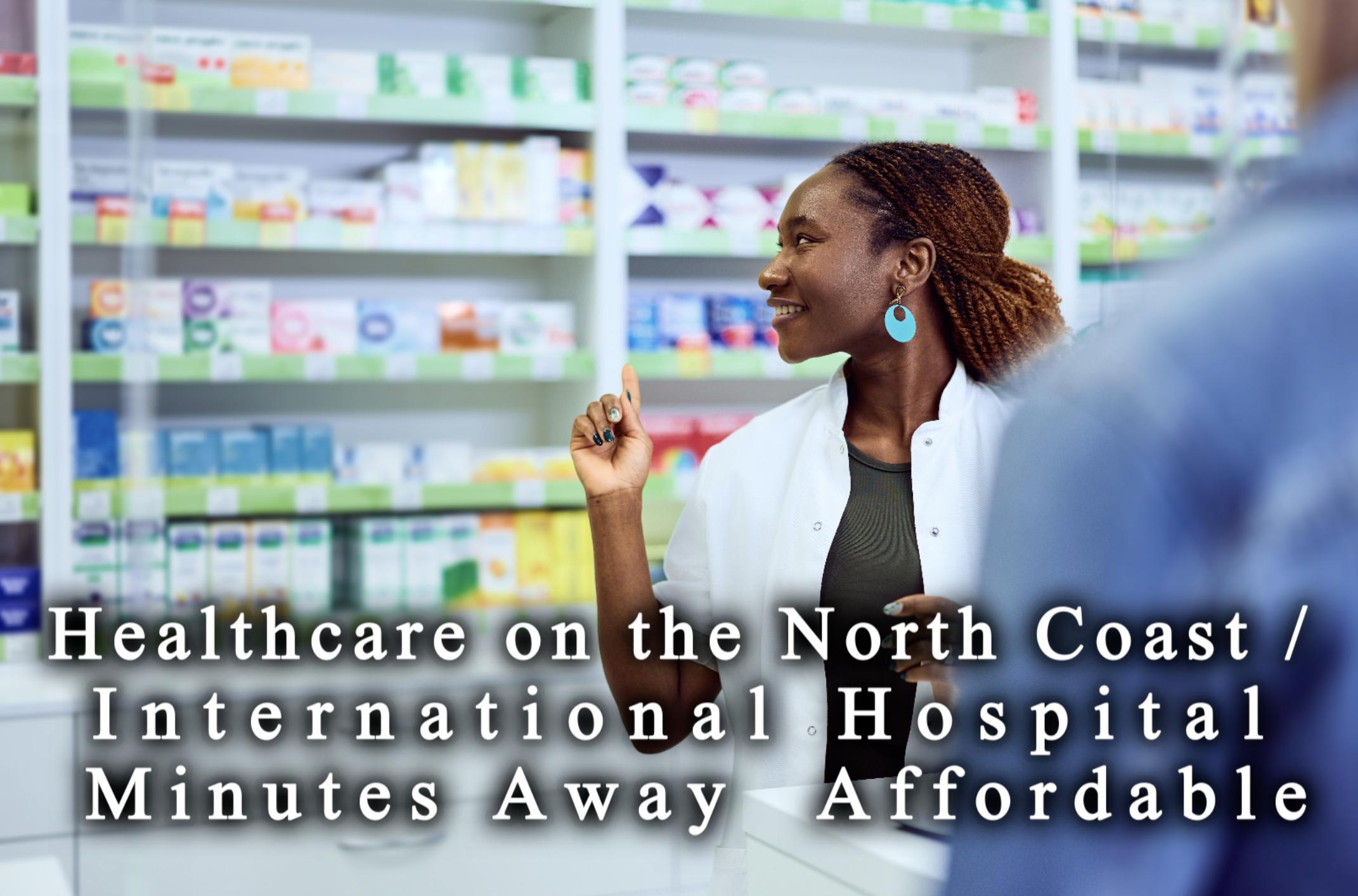
Healthcare is the quiet dealbreaker in most relocation decisions, and the Sosúa–Cabarete corridor performs better than its reputation — an international hospital accepting global plans, clinics minutes away, and 911 fully operational. Here's what to arrange before you move, and how it should shape where you buy.
Quick Answers
What healthcare is actually available on the North Coast?
Private clinics in Sosúa and Puerto Plata handle general consultations, dental work and minor procedures efficiently, Cabarete has a full medical centre, and Sosúa has a newer international hospital that accepts most international insurance plans.
For a corridor of this size that is genuinely good coverage, and it is one of the concrete reasons the area attracts retirees rather than only younger residents.
How far is emergency care from the gated communities?
Close by Caribbean standards. Centro Médico Cabarete is documented at roughly 5 minutes from hillside communities between the towns, and Sosúa's hospital and clinics are 7–10 minutes from most of the corridor's gated communities.
The DR's 911 emergency system is fully operational across the area — worth stating plainly because buyers frequently assume it isn't.
What does routine private care cost compared to the US?
A fraction. Consultations, dental visits and minor procedures cost dramatically less than equivalent US pricing, which is why many residents pay out of pocket for routine care without insurance involvement at all.
Healthcare and labour-intensive services are where the DR's cost advantage is genuinely largest — much more so than on goods, which carry import duties plus 18% ITBIS.
Should I rely on local insurance or carry international coverage?
The consistent advice from long-term residents is to carry international health insurance rather than relying solely on local coverage. Local plans are inexpensive and work well for routine care; international coverage is what matters in a serious event.
The practical difference is choice of facility. With international coverage, a major event routes you to the facility you choose — potentially in Santo Domingo, Santiago or abroad — rather than the nearest available one.
Is local health insurance expensive?
No — residents consistently describe local medical insurance as very inexpensive relative to North American premiums, which is why many households carry both a local plan for routine care and international coverage for catastrophic events.
That combination costs less than a single US policy for most people and covers a wider range of scenarios.
What happens in a genuinely serious medical emergency?
Stabilisation happens locally, and complex cases are typically transferred to larger facilities in Santiago or Santo Domingo, both reachable by road, or evacuated abroad where coverage provides for it.
This is the specific scenario international insurance exists for, and it is worth confirming that any policy you hold includes medical evacuation rather than assuming it does.
Are prescriptions and pharmacies accessible?
Yes — pharmacies are plentiful across both Sosúa and Cabarete and within walking distance in the town-adjacent communities, and many medications that require a prescription in North America are available directly.
Bring documentation of ongoing prescriptions and their generic names rather than brand names, since brand availability differs.
Do doctors speak English?
Widely in this corridor, yes. The Sosúa–Cabarete area has served an international resident population for decades, and English is common in private practice — with German, French and other languages also present given the area's owner mix.
This is genuinely area-specific rather than nationally true, and it is one of the practical advantages of a long-established expat corridor over a newer one.
Does healthcare access affect where I should buy?
For retirees and families it should be a real input, not an afterthought. Town-adjacent communities in Sosúa put a hospital, clinics and pharmacies within walking distance; hillside communities put them 5–15 minutes away by car.
Neither is wrong, but the difference matters more as buyers age, and it is easier to weigh at purchase than to solve afterwards.
What should I arrange before moving, not after?
An international policy confirmed as valid in the DR including evacuation, a local plan for routine care, digital copies of your medical records, generic names for all prescriptions, and a named local contact who knows your medical situation.
Residents who arrange this in advance describe healthcare here as a non-issue. Those who don't tend to discover the gaps at the worst possible moment.
Better than the reputation, with specific limits
Healthcare is the quiet dealbreaker in most international relocation decisions, and it is where the Sosúa–Cabarete corridor performs better than its Caribbean-average reputation suggests. Private clinics in Sosúa and Puerto Plata handle general consultations, dental work and minor procedures efficiently and inexpensively. Cabarete has a full medical centre. Sosúa has a newer international hospital that accepts most international insurance plans — which is a materially different proposition from a facility that accepts none.
That is genuinely good coverage for a corridor this size, and it is one of the concrete reasons the area draws retirees rather than only younger residents and remote workers.
Distances that actually matter
Emergency response time is a function of where you buy, and the corridor's numbers are reassuring. Centro Médico Cabarete sits roughly 5 minutes from hillside communities between the two towns. Sosúa's hospital and private clinics are 7–10 minutes from most of the corridor's gated communities, and walking distance from the town-adjacent ones. The DR's 911 emergency system is fully operational across the area — worth stating plainly, because buyers routinely assume otherwise.
The cost picture, honestly
Routine private care costs a fraction of US pricing. This is where the DR's cost advantage is largest and most reliable — healthcare and labour-intensive services, rather than goods, which carry import duties plus 18% ITBIS and offer no savings at all. Many residents simply pay out of pocket for routine consultations and dental work without involving insurance, because the amounts are small enough not to warrant it.
Local medical insurance is described consistently by residents as very inexpensive by North American standards. That affordability is what makes the standard approach here viable: most established residents carry both.
Why "both" is the right answer
The recurring advice from long-term residents is to carry international health insurance rather than relying solely on local coverage — and the reason isn't quality, it's choice of facility.
Local plans work well for routine care within the local network. In a serious event, international coverage is what determines whether you are treated at the nearest available facility or the one you choose — potentially in Santiago, Santo Domingo, or abroad. Complex cases from the North Coast are typically stabilised locally and transferred to larger facilities in the major cities, both reachable by road, or evacuated internationally where coverage provides for it.
That last point deserves emphasis: confirm your international policy explicitly includes medical evacuation rather than assuming it does. It is the single provision that matters most in the scenario the policy exists for.
Practical details residents get right
- Language: English is widely spoken in private practice across this corridor, along with German, French and other languages reflecting the area's owner mix. This is area-specific rather than nationally true, and is a real advantage of a long-established expat corridor.
- Pharmacies: Plentiful in both towns and within walking distance in town-adjacent communities. Many medications requiring a prescription in North America are available directly.
- Prescriptions: Bring generic names rather than brand names — availability differs by brand — along with digital copies of your medical records.
- Local contact: Someone who knows your medical situation and can act if you cannot. Residents in managed communities often have this by default; standalone owners should arrange it deliberately.
Letting healthcare influence where you buy
For retirees and families this belongs in the purchase decision rather than after it. Town-adjacent communities in Sosúa put a hospital, clinics and pharmacies within walking distance — the community that makes daily life work without a car makes healthcare work without one too. Hillside communities put the same services 5–15 minutes away by vehicle, on winding access roads.
Neither choice is wrong. But the weighting shifts with age and health, it shifts again if you're managing a chronic condition, and it is far easier to factor at purchase than to solve once you own. Buyers in their fifties frequently choose hillside quiet and buyers in their seventies frequently choose walkable access — and both are reasoning correctly for their own situation.
Arrange before you move, not after:
- An international policy confirmed valid in the DR, explicitly including medical evacuation
- A local plan for routine care — inexpensive and worth having alongside
- Digital copies of medical records and prescription history
- Generic names for all ongoing medications
- A named local contact who knows your situation and can act
- A realistic assessment of how far you want to be from a hospital in ten years, not just now
Sources and further reading:
Healthcare availability, cost ranges and the local-plus-international insurance approach cross-checked across independent 2026 cost-of-living and relocation analyses for the Sosúa–Cabarete corridor, and against resident discussions on Expat.com's Dominican Republic forum. Facility proximity figures reflect community-level distances verified during research across the corridor's gated communities. This article is general information, not medical or insurance advice.
More from Blue Sail Realty: Sea Horse Ranch Guide · Casa Linda Guide · The Honest Guide to Buying Real Estate in the DR · The DR Safe-Buying Code · The Blue Sail Remote Closing Path · After-Purchase Support
About the author: James Oosterman, CIPS (Certified International Property Specialist), is Broker/CEO of Blue Sail Realty, headquartered in Cabarete on the Dominican Republic's North Coast. Read real client stories.
Change Currency
USD- USD
- EUR
- CAD
Change Measurement
square meters - m2- square feet - ft2
- square meters - m2
- acres - ac
- square yards - yd2
- hectares - ha
Our Listings
- Affordable Property(46)
- Condos(167)
- Land(10)
- Commercial(11)
- Luxury Property(131)
- Residential(90)
- Villas(147)
Featured Properties
 Luxury 3-Bedroom Oceanview Villa fo... $ 375,000
Seller Financing Available: Furnish... $ 349,000
Oceanside Luxury Villa, Cabarete — ... $ 385,000
Luxury 3-Bedroom Oceanview Villa fo... $ 375,000
Seller Financing Available: Furnish... $ 349,000
Oceanside Luxury Villa, Cabarete — ... $ 385,000-
Mortgage Calculator
-
Login
Register
A password will be e-mailed to you
Reset Password
Social Links: