Updated 25 September 2026
The snowbird is the most common seasonal owner on the North Coast — in residence from November to April, home for the summer, and back again the following winter — and the pattern has its own logistics. Here's the real picture: the season and the entry rules, what happens to the property between seasons, whether and how to let the summer, when the tax and the fee fall due, and what to buy for a six-month life.
Quick Answers
What is the snowbird season here?
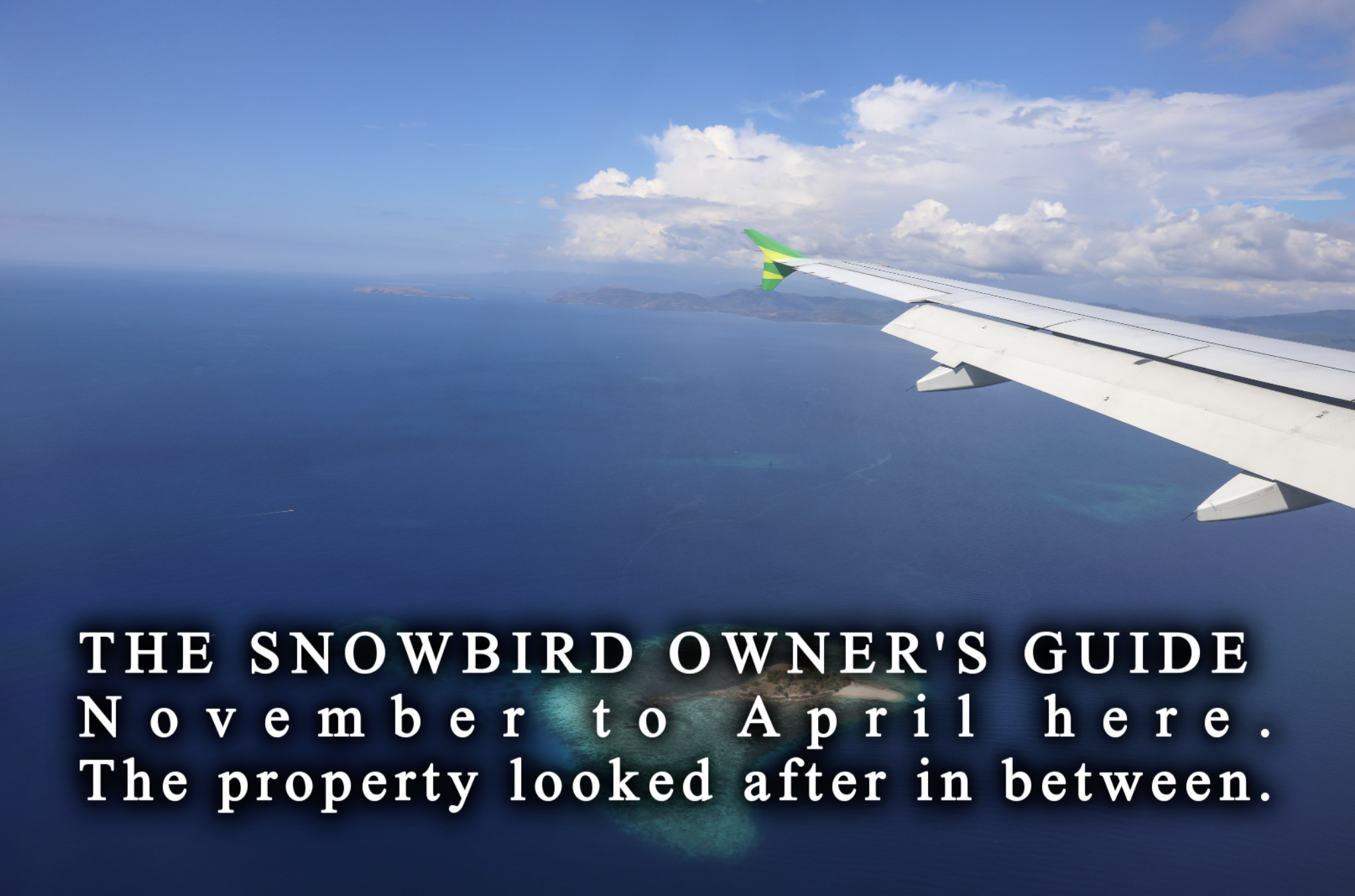
November to April. Arrive as the northern winter starts, leave as it ends. The heaviest direct-flight schedules from Toronto, Montreal and the US Northeast into Puerto Plata run across exactly that window.
December to March is the core; November and April are the shoulders.
How long can I stay?
Visitors enter on a tourist card and can extend a stay; the site's overstay-fee guide sets out the extension schedule and the fee payable on departure for a longer stay.
Property ownership does not by itself change immigration status. A snowbird who wants to stay longer each year, or eventually year-round, considers the pensioner or rentier residency track.
What happens to the property while I'm away?
Blue Sail Realty's in-house property management team handles it — weekly checks, maintenance oversight, post-weather inspection, and the rental side in full if the property is let.
A coastal property does not sit still through a summer. Salt air, humidity and the wet season all work on it, and weekly attention keeps everything in the routine-maintenance category.
Should I let the property in the summer?
Many snowbirds do. The North Coast has a genuine summer letting season from June to August because kite and surf travellers come outside the conventional winter window.
Letting the summer offsets the fee, the insurance and the maintenance for the year, and the in-house team handles listings, guests, rent collection and turnover.
When are the tax and fee due?
Annual IPI, where the appraised value exceeds roughly US$182,000, is paid on 11 March and 11 September — one date while you are here, one while you are away. The community fee is monthly.
The management team handles both from the property's account, so nothing falls due unattended.
What should a snowbird buy?
A property that is ready the day you arrive and simple to close up the day you leave: furnished, in a gated community or a well-run building, with backup power, air-conditioning, and a manager who knows it.
Casa Linda, Residencial Hispaniola, El Batey condos and the Cabarete Bay condos are where snowbirds concentrate, for different reasons.
Do I need a car?
In Sosúa's El Batey or Residencial Hispaniola, no — town, beach and supermarkets are on foot. In Casa Linda or the hills above Cabarete, yes.
Many snowbirds buy a modest vehicle and leave it at the property; the management team keeps it running through the summer.
What about healthcare?
Centro Médico Cabarete and the hospitals in Puerto Plata provide primary and emergency care on the coast; Santiago's private hospitals are ninety minutes for specialist care.
Travel insurance covering the season, or a Dominican private plan, is standard among snowbirds.
Can I bring the dog?
Yes. A health certificate, a current rabies vaccination and any required permit; no quarantine for documented dogs and cats from the US and Canada.
The shipping-and-pets guide sets out the steps. Vets in Cabarete and Sosúa handle the rest.
How do most snowbirds buy?
View in winter while in residence, offer in spring before leaving, close remotely from home in summer, and arrive the following November to a property that is ready.
That sequence is the most common one Blue Sail Realty sees, and the One-Trip pathway is built around it.
The Season
The window: November to April, with December to March as the core. The direct-flight schedules into Puerto Plata from Toronto, Montreal and the US Northeast are heaviest across exactly that window, and the coast's own rhythm — dry season, trade wind, the winter kite season — matches it.
| Month |
On the coast |
For the snowbird |
| November | Wet season begins; shoulder | Arrive; property opened by management ahead of you |
| December | High season opens; kite season | Core season |
| January | Dry season begins | Core season; IPI not yet due |
| February | Dry, windy | Core season; viewing month for buyers |
| March | Dry, windy | Core season; IPI due 11 March, handled by management |
| April | Dry; shoulder | Depart; property closed up by management |
| May–October | Summer letting season, quiet months, hurricane season | Away; weekly checks; summer let if chosen; IPI due 11 September, handled |
The Property Between Seasons
A coastal property left for six months needs attention or it deteriorates. Salt air works on fixings, hinges, railings and metalwork. Humidity works on joinery, soft furnishings and electronics in a closed-up building. Pool chemistry moves in days. Gardens grow year-round. The wet season and the hurricane season both fall in the months the snowbird is away.
| What the in-house team does |
Why |
| Weekly property check | Catches anything in its first week rather than its fourth |
| Pool and grounds | Chemistry, cleaning, garden maintenance |
| Systems | Backup power test, cistern and pump, AC run, water heater |
| Post-weather inspection | After any significant storm through the hurricane season |
| Ventilation and humidity control | Prevents mould in a closed-up building |
| Bills and dates | Community fee, IPI on 11 September, utilities, insurance renewal |
| Vehicle | Started and run if one is kept at the property |
| Opening and closing | Property opened and stocked ahead of arrival; closed up correctly after departure |
The team is in the same operation that handled the purchase, working from the same file, on the same coast. An owner eight hours north does not brief a new party on a building they have never seen.
Letting the Summer
The North Coast has something the resort zones do not: a summer letting season. Kite and surf travellers come from June to August, outside the conventional winter window, and a snowbird's empty property is exactly what they book.
|
Let the summer |
Leave it closed |
| Income | Offsets fee, insurance and maintenance for the year | None |
| Property | Occupied, ventilated, used | Closed up; management ventilates and checks |
| Furnishing | Short-let specification; washable, durable | Owner's own |
| Personal items | Locked owner's closet | In place |
| Management | Full rental side — listings, guests, rent collection, turnover | Weekly checks only |
Net yields on the North Coast have been independently corroborated at 6.5% to 8.1% on a fully let property; a summer-only let earns a portion of that and typically covers the year's carrying costs. The in-house team handles the whole rental side, and the property is handed back to the owner cleaned and reset in November.
What to Buy for a Six-Month Life
| Where |
Why snowbirds choose it |
Car |
| Sosúa — El Batey condos | Walk to Sosúa Beach, Playa Alicia, restaurants, supermarkets; calm bay; nightlife | Not needed |
| Sosúa — Residencial Hispaniola | Gated villa with pool, walk to town and beach, 24-hour power, on-site restaurant | Not needed |
| Casa Linda | Pool villa between the towns, on-site management, built to let | Needed |
| Cabarete — the bay and Kite Beach | Beach-town feel, the bay in front, kite and surf, family-oriented | Optional |
| La Boca and the coast east | Secluded beach, quiet, Starlink | Needed |
The common thread is a property that is ready the day you land and simple to leave: furnished, backup power, air-conditioning, in a gated community or a well-run building, and known to a manager. Cabarete and Sosúa are five minutes apart — Cabarete the more family-oriented beach town, Sosúa the calm swimming bay with considerably more nightlife — and the choice between them is a choice of daily life rather than of distance.
Buying as a Snowbird
The sequence Blue Sail Realty sees most often: view in winter while in residence, on a pre-screened shortlist with sold-price context and fee history on every property; offer in spring before leaving; complete remotely from home over the summer through an independent attorney, a transaction-limited power of attorney and funds to the account named in the contract; and arrive the following November to a property that management has opened and stocked.
Foreign buyers hold full freehold title, identical to a Dominican national's. Total buying cost is 4% — a 3% transfer tax plus a 1% legal fee covered by Blue Sail Realty at closing. Airport pickup is complimentary during the search, and buyers who purchase through us receive a hotel or villa stay of up to two weeks. Canadian snowbirds have their own guide covering the T1135 rule, direct flights and the apostille.
Methodology
The snowbird season, ownership pattern, management practice and area characterisations reflect Blue Sail Realty's transaction and in-house management experience on the North Coast since 2006. IPI payment dates of 11 March and 11 September and the 2026 threshold of RD$10,695,494 (approximately US$182,000) are verified against DGII published rates; the 3% ITBI transfer tax likewise. Net rental yields of 6.5% to 8.1% were cited in Dominican Today, August 2026. Atlantic hurricane season dates are standard; wet-season timing reflects Blue Sail Realty's local guidance. Entry and extension rules are per the site's overstay-fee guide and the Dirección General de Migración. This page is reviewed and updated quarterly.
Questions worth asking as a snowbird buyer:
- "Is the property ready to arrive to and simple to close up — furnished, backup power, gated or well-run building?"
- "Who checks it weekly while I am away, and do they know the property?"
- "Does the North Coast summer letting season cover my carrying costs if I let?"
- "Who pays the IPI on 11 September while I am away?"
- "Do I need a car where this property sits?"
- "Can I view in winter, offer in spring and close remotely in summer?"
- "How does the entry and extension schedule work for a six-month stay?"
- "If I want to stay longer each year, which residency track suits me?"
Sources and further reading:
Snowbird ownership patterns, management practice and area characterisations reflect Blue Sail Realty's transaction and in-house property management experience on the Dominican North Coast since 2006. IPI payment dates, the 2026 threshold and the 3% ITBI transfer tax verified against DGII published rates. Net rental yields of 6.5% to 8.1% were cited in Dominican Today, "Tax Reform, Tourism Records, and a New Resort: What's Behind the North Coast's Real Estate Growth" (August 2026). Entry and extension rules per the Dirección General de Migración. Atlantic hurricane season runs 1 June to 30 November. This article is provided for general informational purposes only and does not constitute legal, tax or immigration advice.
More from Blue Sail Realty: Buying as a Canadian · When to Buy: Seasonality · Property Management · Overstay Fees · Cabarete Real Estate Guide · How Much a House Costs
About the author: James Oosterman, CIPS (Certified International Property Specialist), is Broker/CEO of Blue Sail Realty, headquartered in Cabarete on the Dominican Republic's North Coast, with nearly 20 years of experience and a 5.0 Google rating. Read real client stories.
Want to see Blue Sail Realty first next time you search? Add us as a preferred source on Google.