- Home
- Uncategorized
- Real Estate in Punta Cana, Dominican Republic: The Complete 2026 Buyer’s Guide
Your search results

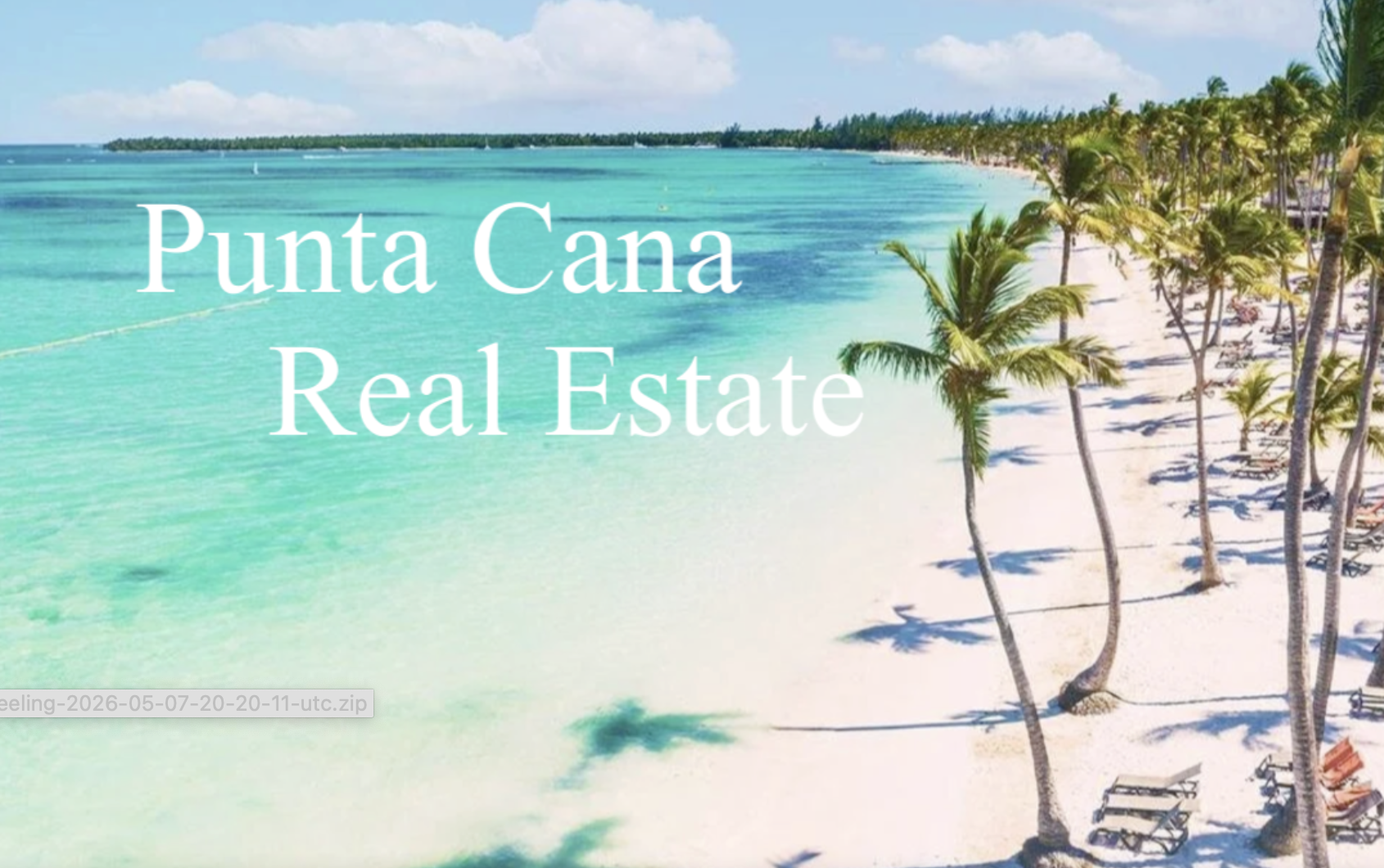
Real Estate in Punta Cana, Dominican Republic: The Complete 2026 Buyer’s Guide
Punta Cana has moved well past its all-inclusive resort reputation into a genuinely diversified property market, with year-round demand from vacation-home buyers, retirees and rental investors. This guide covers the details that actually shape a purchase here: real yield data by neighbourhood, what CONFOTUR does and — more importantly — what it doesn’t do when you resell, the true buyer-side cost of closing, the one infrastructure advantage Punta Cana holds over the rest of the country, and what daily life looks like for owners who eventually relocate.
Quick Answers
What is happening in the market in 2026?
Sustained growth — premium segments up roughly 5–12% annually.
The DR recorded over 6.6 million visitors in the first half of 2026, up 7.7% year over year, and Arajet plans a Punta Cana International hub in November 2026 with applications filed for up to 19 international routes.
What property types are available?
Condos for rental income, apartments for affordable entry, villas for privacy and space.
Condos in resort-style buildings are the strongest income generators; villas generally deliver a lower net yield than a well-located condo.
What does property cost?
Roughly $150–$350 per square foot.
A one-bedroom Bavaro condo averages around $131,000; entry-level Cap Cana starts near $350,000; the largest estates reach $25 million and beyond.
Which area has the best rental yields?
Bavaro — about 9.6% gross and 5.6% net on one-bedroom condos.
Downtown Punta Cana, Veron and Friusa follow. Cap Cana and Punta Cana Village drop to roughly 2.4% net once carrying costs are subtracted.
Can foreigners buy safely?
Yes — identical freehold rights to Dominican citizens under Article 25 of the Constitution.
Safety is procedural: your own independent attorney, a registered escrow service, and a verified deslinde before any funds move.
Are there private beaches?
No — not one, anywhere in the country.
The first 60 metres from the high-tide line is public domain under Law 305-68 and cannot be sold to anyone. Communities control access, not sand.
What closing costs apply?
4–5.5% buyer-side — not the 4–9% often quoted.
3% transfer tax on DGII’s appraised value, 1–1.5% legal fees plus 18% ITBIS, title and valuation costs. The commission is seller-paid and isn’t your cost.
What is CONFOTUR — and does it transfer on resale?
A 15-year tax exemption — and no, it does not automatically transfer to resale buyers.
The amended statute restricts benefits to direct investments with the developer, and the clock runs from project approval rather than your purchase date.
Does Punta Cana have better electricity than the rest of the DR?
Yes, and it’s documented.
Punta Cana and La Romana run independent grids. When the national grid collapsed in February 2026 for over eight hours, Punta Cana stayed lit and the north coast didn’t.
Does buying property lead to residency?
A $200,000 purchase can qualify you for Permanent Residency as an Investor.
Granted as permanent status from the outset. Sources differ on the onward timeline to citizenship, so get case-specific legal advice.
What’s life like for owners who relocate?
Private hospitals, international schools, and roughly $2,542/month for a comfortable single-person budget.
Important: US Medicare does not cover you outside the United States. Budget for local or international coverage plus separate medical evacuation.
What Is Actually Driving the Punta Cana Boom in 2026?
Three forces are compounding at once. First, tourism: the Dominican Republic recorded more than 6.6 million visitors in the first half of 2026 alone, up 7.7 percent year over year, putting the country on pace to surpass 12 million for the full year. Second, connectivity: airline Arajet plans to open a dedicated base at Punta Cana International Airport in November 2026, with applications filed for up to 19 international routes across the Americas — a hub-and-spoke strategy that would meaningfully widen the pool of travellers, and future buyers, passing through the region. Third, government policy continues to court foreign capital through tax incentives and a residency-by-investment programme, both covered below.
Together these have pushed the market toward a more mature, infrastructure-backed growth phase rather than a speculative one — appreciation in premium segments running at a sustainable 5 to 12 percent annually rather than the sharper spikes seen in some other Caribbean and Latin American markets.
What Types of Properties Can You Buy?
Condos in resort-style buildings with communal pools, fitness centres and 24-hour security. These are the most popular option with tourists and short-term renters, which makes them the strongest income generators of the three types.
Apartments, often slightly inland or in mixed-use communities like Veron and Friusa, offering a lower entry price that suits long-term renters, remote workers and buyers prioritising affordability over beach proximity.
Villas, typically freestanding on golf courses or near the beach, for buyers who want privacy, a private pool and more square footage — generally at a lower net rental yield than a well-located condo.
How Much Does Property Actually Cost?
Prices generally run from about $150 to $350 per square foot, with the wide range reflecting how much beach proximity, finish quality and community exclusivity matter here. A one-bedroom condo in Bavaro currently averages around $131,000, entry-level condos in Cap Cana start closer to $350,000, and the largest luxury villas and beachfront estates can reach $25 million or more.
For regional context: Dominican luxury property averages roughly $245 per square foot in asking prices across the country, against approximately $702 in the Bahamas, $866 in Turks and Caicos and $898 in the Cayman Islands. The Dominican Republic remains one of the strongest value propositions in the Caribbean at comparable beach quality.
Which Neighbourhoods Actually Have the Best Rental Yields?
| Area | Gross yield | Net yield |
|---|---|---|
| Bavaro | 9.6% | 5.6% |
| Downtown Punta Cana | 9.4% | 5.3% |
| Veron | 9.2% | 5.4% |
| Friusa | 9.1% | 5.2% |
| Los Corales | 8.6% | 3.4% |
| Cap Cana | 8.3% | 2.4% |
| Punta Cana Village | 7.6% | 2.4% |
One-bedroom condo data. Figures from TheLatinvestor’s 2026 Punta Cana rental yields analysis — a single commercial source, so treat the precise decimals as indicative rather than definitive.
The pattern is consistent: net yield compresses sharply in higher-end communities once HOA fees, vacancy, furnishing reserves and professional management are subtracted from the higher gross rents those areas command. A Cap Cana condo rents for considerably more per night than a Bavaro equivalent, but its much higher purchase price and carrying costs mean the actual cash-on-cash return often lands lower. Buyers focused purely on income tend to do best in the mid-market, high-occupancy areas. Cap Cana and Punta Cana Village suit buyers prioritising lifestyle, appreciation and long-term capital preservation over near-term cash flow.
Cap Cana vs. Bavaro vs. the Rest
Bavaro is the region’s walkable, high-energy core — dense with restaurants, beach clubs and nightlife, and the strongest area for near-term rental occupancy. Cap Cana is a 6,200-acre master-planned community built around a marina with over 150 slips, the Jack Nicklaus-designed Punta Espada course, and Juanillo Beach, roughly ten minutes from the airport. Puntacana Resort & Club is a separate 15,000-acre development — frequently confused with Cap Cana — with 45 holes including the Tom Fazio-designed Corales course, a PGA TOUR host venue since 2018, and direct connection to the airport. Vista Cana is a newer master-planned development where pre-construction pricing has drawn investor attention. Further along the coast, Uvero Alto and Bayahibe offer quieter, less-developed alternatives at lower price points.
Pre-Construction vs. Resale
Buying pre-construction typically locks in pricing 10 to 20 percent below eventual market value, with the property appreciating as construction progresses and developers commonly offering interest-free payment plans across the build period. The trade-off is time and execution risk — you’re relying on the developer’s track record and timeline rather than a finished, inspectable product. Resale costs more upfront but lets you see the space, inspect for defects, and generate rental income immediately.
Investors focused on early appreciation tend to favour pre-construction; investors who want cash flow from day one tend to favour resale.
Can Foreigners Buy Safely?
Yes, and the legal framework is genuinely favourable. Non-Dominicans have identical freehold ownership rights to citizens under Article 25 of the Constitution, with no restrictions on foreign purchases and no separate approval process required because of nationality. But “safe” depends entirely on procedure, and most problem transactions trace to skipping one of these steps.
The four steps that prevent almost every problem:
- Hire an independent real estate attorney. Never rely on the developer’s or seller’s lawyer to represent your interests.
- Never wire funds directly to a seller’s personal bank account. Use a registered escrow service.
- Verify the developer’s track record independently before any pre-construction commitment.
- Confirm the property has a legally registered deslinde — the GPS-verified, legally demarcated boundary recorded with the Jurisdicción Inmobiliaria — before signing.
Your attorney’s title search is the step that catches most problems before they become expensive: checking the national property registry to confirm there are no hidden liens, unresolved mortgages or ownership disputes attached to the land. Worth knowing: the Dominican notary who finalises your purchase holds a more substantial role than in the US or Canada — Dominican notaries are qualified attorneys acting as state-delegated officials who authenticate the legality of the transaction itself, not merely witnesses to a signature.
There Are No Private Beaches in the Dominican Republic
This surprises nearly every North American buyer. The first 60 metres inland from the high-tide line is public domain under the Dominican Constitution and Law 305-68 — inalienable, imprescriptible and unseizable. It cannot be sold, to anyone, ever, whether Dominican or foreign.
What gated communities and resorts actually control is access: roads, gates and security. That produces beaches that are effectively quiet and lightly used, which is what buyers are genuinely paying for. But the honest word is semi-private, and any listing in this country describing a “private beach” is describing something that does not legally exist. On oceanfront land specifically, confirm the survey accounts for that 60-metre setback so you know what your actual buildable area is.
What Closing Costs and Ongoing Taxes Should You Budget For?
You’ll see Dominican closing costs quoted as anywhere from 4 to 10 percent. That range includes the agent commission — which in Dominican practice is customarily paid by the seller, not you. Realistic buyer-side closing costs run 4 to 5.5 percent.
| Cost | Amount | Note |
|---|---|---|
| Property transfer tax | 3% | Calculated on DGII’s appraised value, which can exceed your negotiated price |
| Legal and notary fees | 1.0–1.5% | Plus 18% ITBIS charged on top of those professional fees |
| Title search | $150–$2,000 | Varies with complexity |
| Formal valuation | $300–$800 | |
| Agent commission | ~5% | Customarily seller-paid — not a buyer cost |
After closing, the ongoing cost is IPI (Impuesto al Patrimonio Inmobiliario), the annual property tax. It applies at 1 percent per year, but only on the portion of value exceeding RD$10,695,494 — approximately $181,000 — for 2026. That threshold is adjusted annually for inflation. In practice, many mid-market condo purchases in Punta Cana fall entirely under it and owe no annual IPI at all.
Two details worth verifying with your own attorney rather than assuming: the threshold applies to a person’s aggregate Dominican holdings rather than to each property separately, and property held through a trust structure is taxed at 1 percent of total value with no threshold at all. Some sources state that a couple holding title jointly effectively doubles the exemption — plausible, but confirm it for your specific ownership structure before relying on it.
What CONFOTUR Actually Gives You — and the Two Traps
CONFOTUR is the widely used name for Law 158-01, the Dominican Tourism Incentive Law enacted in 2001 to attract investment into tourism-zone development, later amended by Law 195-13. It is administered jointly by the Consejo de Fomento Turístico and the Ministry of Tourism, and there are no restrictions based on a buyer’s nationality or residency — foreign investors qualify on the same terms as Dominicans.
For a government-approved project the benefits are substantial: full exemption from the 3 percent transfer tax, exemption from annual IPI for 15 years, up to 10 years of exemption on income derived from the project including rental income, and duty-free import of construction materials and equipment.
Two things most coverage of CONFOTUR gets wrong — and they cost buyers money:
- The exemption does not automatically transfer to you on resale. The amended statute restricts benefits to those making direct investments with the promoter or developer, and explicitly excludes subsequent transfers to third-party purchasers. If you are buying a CONFOTUR property from a private seller rather than from the developer, do not assume the exemption comes with it.
- The 15-year clock runs from project approval and completion, not from your purchase date. Buy into a project approved eight years ago and you inherit seven years, not fifteen.
Ask three questions in writing, through your own attorney: is this project actually CONFOTUR-approved, and can I see the resolution? How many years remain on the term? And if I am buying from a private seller rather than the developer, does the exemption survive this transfer? If nobody can answer clearly, price the property as though the exemption does not exist — because for you, it may not.
The Infrastructure Advantage Punta Cana Actually Has
Here is something genuinely in Punta Cana’s favour that rarely appears in buying guides. The Dominican national electrical grid collapsed completely twice within three months — on 11 November 2025, affecting roughly 11 million people, and again on 23 February 2026 for over eight hours, with some areas dark past midnight.
Punta Cana and La Romana operate on independent grids. Both were unaffected by the February 2026 national blackout, while areas on the national grid — including the entire north coast — lost power for over eight hours.
For a buyer, that is a meaningful and verifiable difference in day-to-day reliability. It does not eliminate the need to ask about a building’s generator, inverter and cistern arrangements — you should still ask, and any well-built property here will have them — but it does mean the base-case reliability in the Punta Cana area is better than in most of the country.
Sargassum: The Honest Position
Sargassum seaweed is a real factor in Caribbean buying decisions and it affects Punta Cana and the Dominican east coast most summers. The mechanism is ocean currents: sargassum from the tropical Atlantic enters the Caribbean Sea through gaps in the Lesser Antilles, then the Caribbean Current carries it northwest across the basin — a route that runs directly past the Dominican east coast.
Punta Cana’s hotel and community operators run daily cleanup during affected periods, and a government- and hotel-association-funded barrier project for the Bávaro–Punta Cana corridor has been budgeted at roughly $11.9 million. For context on scale, Mexico’s Riviera Maya — at the downstream end of that same current — is substantially worse affected, with over 90,000 tons reported floating off Quintana Roo in August 2026.
If beach conditions are a primary concern, this is worth researching for the specific stretch of coast you’re considering, and worth checking against a live source such as the University of South Florida’s Sargassum Watch System rather than any single website’s blanket claim.
How Buying Property Leads to Dominican Residency
Real estate investment doubles as one of the more direct paths to residency. Investing a minimum of $200,000 in Dominican real estate can qualify a foreign buyer for Permanent Residency as an Investor (Residencia Permanente en Calidad de Inversionista) — notably granted as permanent status from the outset rather than starting as a temporary permit requiring later upgrade.
The process runs through two bodies: first you obtain a foreign investment certificate (Constancia de Inversión Extranjera) from CEI-RD, the Export and Investment Center, confirming your qualifying purchase; then you submit your residency application with that certificate and supporting documentation to the Dirección General de Migración.
On the onward timeline to citizenship, be careful with what you read — leading Dominican law firms genuinely disagree. Some describe a six-month fast track for investment-residency holders; others describe the standard two-year permanent-residency route. Get case-specific legal advice rather than planning around a figure from any blog, including this one.
What Life Is Like for Owners Who Relocate
For buyers thinking beyond a rental investment toward an eventual move, the practical infrastructure is more developed than many expect. Private healthcare is available through Hospiten Bávaro, IMG Hospital and Centro Médico Punta Cana, with a typical consultation costing roughly $34 to $68 — a fraction of comparable US or Canadian out-of-pocket costs.
Families relocating with children have several international school options, including Puntacana International School, Cap Cana Heritage School and BBS International School of Bávaro, with annual tuition generally $7,000 to $15,000 per child plus registration fees.
On day-to-day costs, a single person can generally live comfortably on roughly $2,542 per month, with housing the largest single expense — one-bedroom rentals run about $983 to $1,356 monthly. Most relocating expats cluster in gated communities such as Cap Cana, Puntacana Village and Cocotal Golf & Country Club, both for security and for the built-in social community.
Two healthcare realities for North American retirees, from US federal sources:
- US Medicare does not cover medical services outside the United States — not partially, not anywhere. The US Embassy and State Department both state this plainly. You need a local Dominican ARS plan or an international policy.
- Budget separately for medical evacuation. The US Embassy in Santo Domingo puts a medevac to the United States at well in excess of $50,000, with the patient or arranger responsible for all costs.
What Buyers and Sellers Should Take From This
For buyers, the Punta Cana opportunity in 2026 is less about chasing the fastest appreciation and more about matching property type and neighbourhood to your actual goal — Bávaro-area condos for rental cash flow, Cap Cana or Vista Cana for appreciation and lifestyle, pre-construction if you can tolerate build-period risk for a lower entry price. Whichever path, budget the real 4 to 5.5 percent buyer-side closing cost, confirm CONFOTUR status and remaining term in writing rather than taking a listing’s word for it, and work with your own attorney and a registered escrow service.
For sellers, the tailwinds are structural rather than seasonal: record tourism, improving international air connectivity through Punta Cana specifically, and a government still actively incentivising foreign investment through both tax policy and residency pathways. That combination supports pricing more durably than a single strong tourist season would on its own.
Punta Cana Real Estate with Blue Sail Realty
Blue Sail Realty represents buyers and sellers across the whole Dominican Republic, including every part of the Punta Cana region — Bávaro, Cap Cana, Verón, Friusa, Uvero Alto and Bayahibe — backed by nearly two decades of island-wide experience and a public, verifiable 5.0 rating on Google Reviews.
Sources and further reading:
Tourism figures: Caribbean Journal. CONFOTUR: ICLG.com briefing, plus Law 195-13 and Law 158-01 (DGII). Property tax: DGII Guide No. 17 on IPI. Rental yields, taxes, residency and expat data: TheLatinvestor rental yields, property taxes and fees, buying for residency, and Punta Cana expat guide. National grid failures: Reuters via US News and DR1. Healthcare and medevac: US Embassy Santo Domingo. Sargassum monitoring: USF Sargassum Watch System.
More from Blue Sail Realty: Condos and apartments with excellent rental yields · Real estate in the Dominican Republic · The DR Safe-Buying Code
About the author: James Oosterman, CIPS (Certified International Property Specialist), is Broker/CEO of Blue Sail Realty, headquartered in Cabarete on the Dominican Republic’s North Coast, with nearly 20 years of experience and a 5.0 Google rating. Read real client stories.
Want to see Blue Sail Realty first next time you search? Add us as a preferred source on Google.
Related Posts
Buying Land in Cabarete: What Foreigners Nee...
Aug 05, 2026
Published August 3, 2026 · By James Oosterman, CIPS · Broker/CEO, Blue Sail Realty · North Coa ...
Continue reading
Cabarete Real Estate Market 2026: Prices, Tr...
Aug 04, 2026
Published August 3, 2026 · By James Oosterman, CIPS · Broker/CEO, Blue Sail Realty · North Coa ...
Continue reading
Is Cabarete, Dominican Republic Safe? A Fore...
Aug 03, 2026
Published August 3, 2026 · By James Oosterman, CIPS · Broker/CEO, Blue Sail Realty · North Coa ...
Continue reading
Change Currency
USD- USD
- EUR
- CAD
Change Measurement
square meters - m2- square feet - ft2
- square meters - m2
- acres - ac
- square yards - yd2
- hectares - ha
Our Listings
- Affordable Property(45)
- Condos(167)
- Land(10)
- Commercial(11)
- Luxury Property(130)
- Residential(89)
- Villas(145)
Featured Properties
 Luxury 3-Bedroom Oceanview Villa fo... $ 375,000
Oceanside Luxury Villa, Cabarete — ... $ 350,000
Furnished at $285,000, Golf Cart In... $ 285,000
Luxury 3-Bedroom Oceanview Villa fo... $ 375,000
Oceanside Luxury Villa, Cabarete — ... $ 350,000
Furnished at $285,000, Golf Cart In... $ 285,000-
Mortgage Calculator
-
Login
Register
A password will be e-mailed to you
Reset Password
Social Links: