Your search results

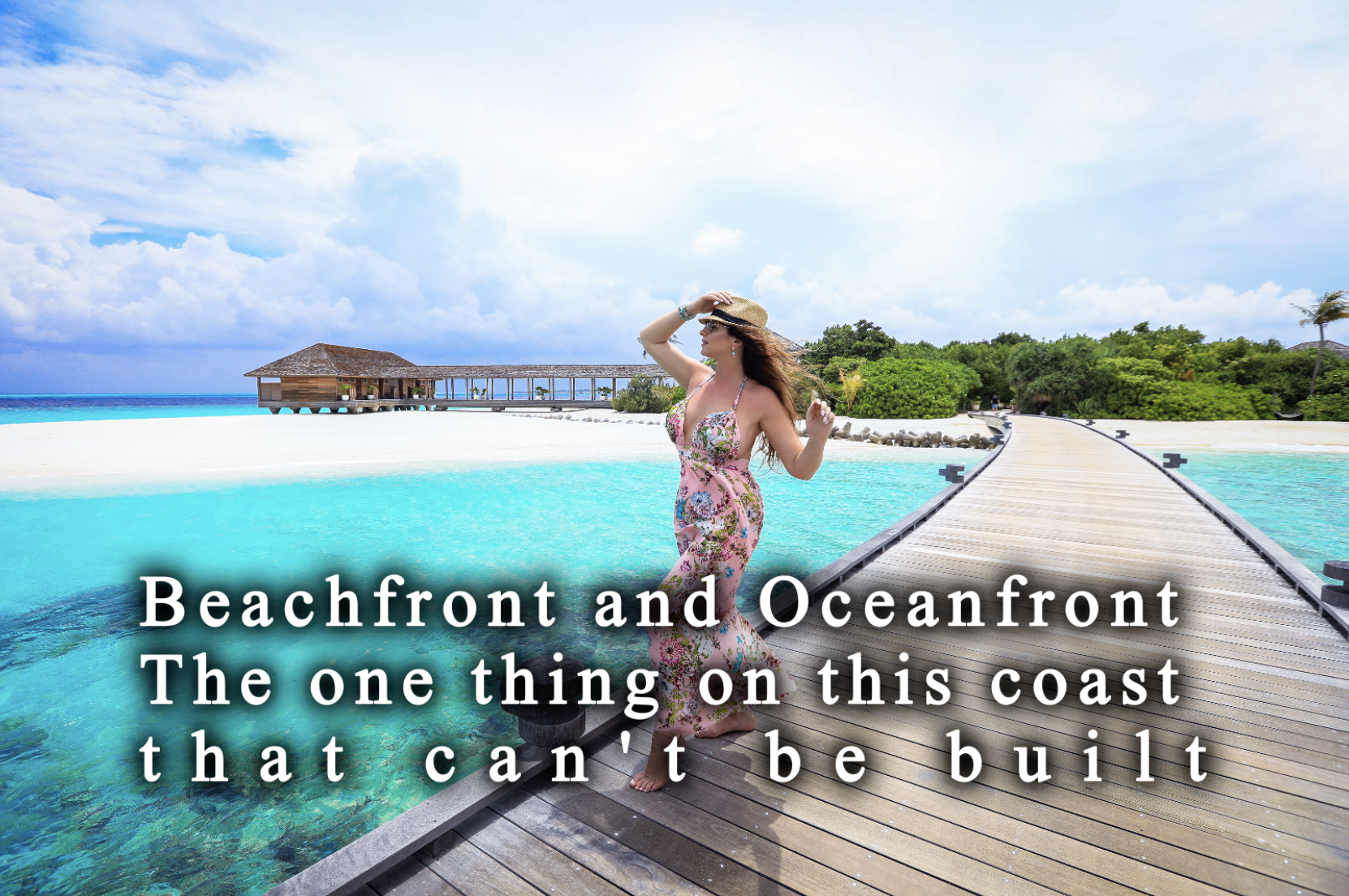
Frontage Is Finite — Beachfront and Oceanfront on the North Coast
Every other feature of a property on this coast can be created. A pool can be dug, a kitchen replaced, a roof terrace added, a garden planted and grown in. Frontage cannot. That single fact explains the price of oceanfront on the North Coast, and it explains why second line is often the better purchase. This is what the terms actually mean here, what each position costs, and what owning on the water involves.
Quick Answers
What is the difference between beachfront, oceanfront and ocean view?
Beachfront means the property fronts directly onto sand with no road between. Oceanfront means water frontage, which on parts of this coast is rock or low cliff rather than beach. Ocean view means you can see the water from the property, which may be from elevation several streets back.
The terms get used loosely in listings. What matters is what sits between the building and the water, and how you reach the sand.
What is "second line", and why do buyers choose it?
Second line means one street back from the front row, typically a two to ten minute walk from the sand.
Three reasons buyers choose it deliberately. Considerably less salt exposure, which shows in maintenance costs and how finishes age. A quieter setting, since the beach path traffic passes in front of the first row rather than yours. And meaningfully better value per square metre for the same beach access.
What does oceanfront cost on the North Coast?
Entry-level oceanfront generally begins around $700,000 and runs to $1.65 million for a villa, with the top of the market above that. Oceanfront penthouses and apartments in Sosúa sit from roughly $900,000.
Second line equivalents typically sit well below those figures for a comparable house, which is where a lot of the value on this coast is found.
Where is the oceanfront on this coast?
Sosúa's headlands hold established oceanfront around a sheltered swimming bay. Cabarete has beachfront along the bay itself, including the Kite Beach stretch. The Encuentro corridor has oceanfront between the road and the water. Cabrera and the eastern coast hold cliff-top frontage on large parcels. Cofresí offers headland positions west of Puerto Plata.
What does salt air actually do to a building?
It works continuously on everything metal and everything sealed. Fixings, hinges, rails, window and door hardware, outdoor electrics, air conditioning condensers, pool equipment, and light fittings all degrade faster in the front row.
It's entirely manageable with the right specification — stainless of the correct grade, powder-coated aluminium, marine-grade sealants — and expensive to remediate when the original build used the wrong materials. This is the single most important thing to examine on a front-row property.
Does oceanfront rent better?
Front row commands a premium and photographs exceptionally well, which matters for bookings. Occupancy differences between front row and a two-minute walk are smaller than the price difference between them.
For an owner buying primarily for income, the arithmetic often favours second line: the rate premium on front row rarely covers the purchase premium plus the higher maintenance.
Is there a setback rule I should know about?
Coastal property in the Dominican Republic is subject to maritime zone rules affecting how close to the water you can build and what remains public. This is checked as part of due diligence on any front-row purchase, alongside the registered deslinde boundary survey.
What should I look at on a front-row viewing?
The condition of every piece of exterior metal. Window and door seals. The underside of terraces and balconies. Air conditioning condensers and pool equipment, and their age. Whether the building has had exterior repainting on a regular cycle, and when.
Then the beach itself, at low and high tide. Beach width on this coast varies through the year, and a wide beach in March is not always a wide beach in November.
How does Blue Sail approach oceanfront?
It sits in the upper tier of our investable luxury band — $1 million to $3 million — because frontage is the one attribute that can't be replicated and therefore the one most likely to hold value.
The same four standards apply: title ready and clear to transfer, a functioning community association, reasonable and well-managed fees, and an area we consider good and safe.
The three positions
| Position | What it means | Trade-off |
|---|---|---|
| Beachfront / first row | Fronts directly onto sand or water, nothing between | Highest price, highest salt exposure, most passing traffic on the beach side |
| Second line | One street back, a two to ten minute walk | Considerably less salt, quieter, better value per square metre |
| Ocean view / elevated | Water visible from elevation, often several streets back | Lowest salt exposure and often the best panorama, but you drive or walk further to the sand |
Why frontage holds value
Land on this coast is not scarce. Land with water on it is.
Inventory in the second and third rows grows whenever a developer clears a lot. Frontage does not grow at all — the coastline is a fixed length, most of the good stretches are already built on, and maritime zone rules constrain what can happen on the remainder.
That's the whole argument for oceanfront as an asset rather than an indulgence. A buyer in fifteen years will have the same number of oceanfront positions to choose from as today, and more competition for them.
Why second line is often the better buy
The case for second line is not a consolation. It's arithmetic.
Maintenance. Salt exposure falls off quickly with distance and shelter. The difference in annual upkeep between front row and one street back is real and recurring, and it compounds over a hold period.
Purchase premium versus rate premium. Front row costs materially more to buy. It earns a higher nightly rate, but not proportionally higher, and occupancy differences are modest when the walk is two minutes.
Quiet. On a public beach, the traffic passes the first row. Second line gets the sound of the water without the footfall.
Value per square metre. The same money buys a bigger, better-specified house one street back. For a buyer who wants four bedrooms and a pool rather than a small unit on the sand, that's decisive.
Where the frontage is
Sosúa headlands
Established oceanfront villas and penthouses above a sheltered swimming bay, with the deepest professional services on the coast behind them.
Cabarete Bay
Beachfront along the bay including the Kite Beach stretch, with the strongest year-round rental demand on the coast.
Encuentro corridor
Oceanfront between the road and the water, alongside the North Coast's most consistent surf break.
Cabrera & the east
Cliff-top frontage on large parcels, the most dramatic positions on the coast, at prices that buy considerably less closer to the airport.
Cofresí
Headland elevation and genuine ocean views west of Puerto Plata, at lower entry points than equivalent views further east.
Costambar
A calm, swimmable beach with an established walkable community, and the coast's most accessible entry into near-beach ownership.
Specification that survives the front row
If you buy on the water, the build matters more than the finish.
Correct-grade stainless on all exterior fixings, not the cheaper grades that streak within a season. Powder-coated aluminium joinery rather than untreated metal. Marine-grade sealants at every glazing junction. Condensers and pool equipment sited with some shelter rather than facing open water. Exterior repainting on a regular cycle, documented.
A front-row property with the right specification is a long-term asset. One built to inland specification becomes a series of invoices. Which of the two you're looking at is the central question on any beachfront viewing.
Where to start
Tell us the budget and whether the property needs to earn. We'll come back with what's available in each position — front row, second line and elevated — with comparable sales so you can see what the frontage premium actually is in that area.
Read next: investable luxury on the North Coast, the foreign buyer's playbook, and Cabarete properties.
See what's on the water
Front row, second line and elevated, with comparable sales for each so the premium is visible.
Request a shortlist
James Oosterman
Broker & CEO · Certified International Property Specialist (CIPS)
Blue Sail Realty · 113 Main Street, Cabarete, Puerto Plata, Dominican Republic
Call or WhatsApp +1 849 283 4906 · james@bluesailrealty.com
bluesailrealty.com
Featured Properties