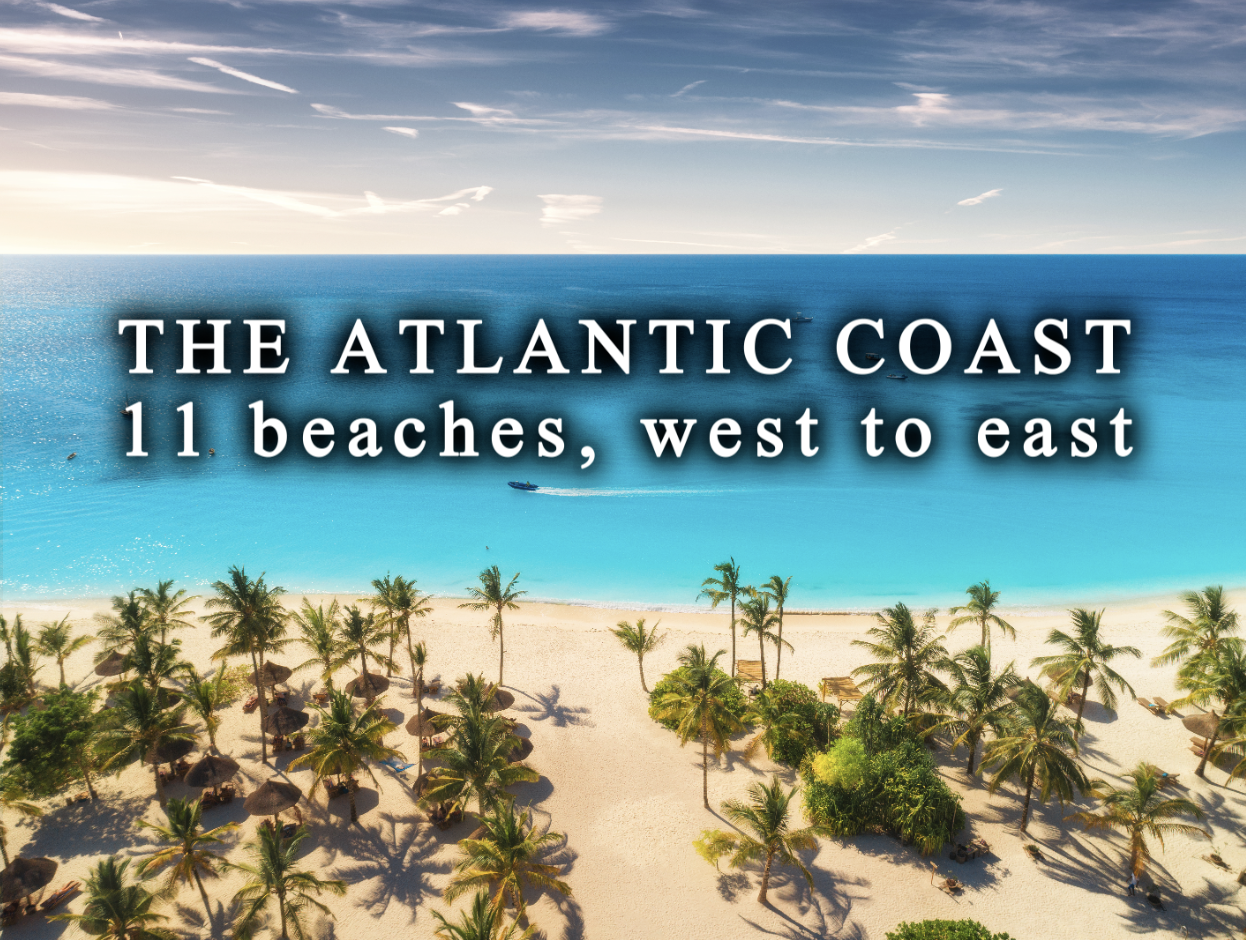
The Atlantic coast is not the Caribbean coast, and the difference shows up in the water — which is why "best beach" lists that lump them together are close to useless here. Here's the real picture: roughly 200 kilometers from Puerto Plata east to Cabrera, beach by beach, including the ones that photograph beautifully and shouldn't be swum.
Quick Answers
Where is the north coast of the Dominican Republic?
The Atlantic coast runs from Puerto Plata east through Sosúa, Cabarete, Río San Juan, and Cabrera — roughly 200 kilometers of coastline.
It's distinct from the south coast and the Punta Cana region in climate, landscape, and water conditions, which is why generic Dominican beach advice frequently doesn't apply here.
Which beach is best for swimming?
Playa Sosúa — a protected horseshoe bay with calm, clear water and easy entry.
That makes it the default family beach on this stretch. Playa Alicia, a short walk away down cliff steps, is quieter with fewer vendors and cleaner sand.
Which beach is best for surfing?
Playa Encuentro, a few minutes west of Cabarete, with several distinct peaks along the reef.
Mornings are the session — the same trade winds that made Cabarete famous flatten the surf by early afternoon.
Which beach is best for kitesurfing?
Kite Beach and Cabarete Bay, among the most consistent riding locations in the Caribbean.
Cabarete Bay is the more forgiving of the two for anyone learning, which is why the town became a global teaching center rather than just a good spot.
Can you swim at Playa Encuentro?
Honestly, no — entry is over reef and rock, and there's current.
Go there to surf or to watch. Swim at Sosúa or in Cabarete Bay before the afternoon wind arrives.
Are Dominican beaches public?
Yes, all of them, up to the high-water line — including beaches fronting resorts and gated developments.
A 60-meter maritime zone from the high-water mark is state land nationwide and cannot be privately owned, which is why no Dominican property is legally on the sand however a listing describes it.
Which north coast beach is the most beautiful?
Playa Grande, near Río San Juan — wide, long, backed by cliffs and forest.
It's a looking-and-walking beach rather than a swimming one; the shore break is genuinely powerful and deserves respect.
When is the best time to visit?
The North Coast's wetter months run November through January.
That's the opposite of what most Dominican Republic weather summaries suggest, because they describe the south coast. Our separate weather guide covers the seasons properly.
How safe is the water here?
Variable, and worth taking seriously — the Atlantic side has real current and real shore break, and lifeguards are the exception rather than the rule.
Playa Grande and Playa Preciosa in particular have caught out strong swimmers. Ask locally before entering anywhere unfamiliar.
Which beach towns actually have property for sale?
Cabarete, Sosúa, Cabrera, Río San Juan, and Puerto Plata all have active residential markets.
In Cabarete, non-oceanfront property starts at $120,000 and oceanfront condos at $150,000, with oceanfront villas from $550,000.
The Beaches, West to East
1. Playa Dorada
The resort strip just east of Puerto Plata city, backed by hotels and a golf course. Calm, groomed, and the easiest access on the coast. Less character than what lies further east, but the least effort.
2. Playa Sosúa
A protected horseshoe bay with calm, clear water — the best straightforward swimming on this stretch. Snorkeling at the reef edges, and a busy line of vendors and restaurants behind the sand.
3. Playa Alicia
A short walk from Playa Sosúa and noticeably quieter, reached by steps down from the cliff. Fewer vendors, cleaner sand, and the reliable alternative when Sosúa fills up.
4. Playa Encuentro
The North Coast's main surf break, a few minutes west of Cabarete, with several distinct peaks along the reef. The surf schools here operate year-round. Mornings are the window, and entry is over reef and rock — which makes this a surf beach rather than a swimming one, a distinction worth understanding before you drive out with a family.
5. Kite Beach
West of Cabarete town and exactly what the name promises. Wind builds through the afternoon almost daily and the water fills with kites. Condo-heavy behind the sand.
6. Playa Cabarete (Cabarete Bay)
The main bay, and the reason the town exists in its current form. A protected reef takes the swell down while afternoon trade winds come across the water — forgiving conditions that made this one of the world's teaching centers for kitesurfing and windsurfing. The beachfront restaurant strip sits directly on the sand, and swimming is fine in the morning before the wind and the boards arrive.
7. Bozo Beach
Between Kite Beach and the bay, with more shore break and fewer people. Popular with downwinders finishing a run.
8. Playa Grande
Near Río San Juan, and widely considered among the most beautiful beaches in the country — wide, long, backed by cliffs and forest, with a golf course above. The shore break is powerful. Beautiful to walk, and not a casual swimming beach whatever the photographs suggest.
9. Playa Preciosa
Immediately next to Playa Grande and almost always emptier. Strong current, which makes it better for surfing and walking than for swimming.
10. Cabrera and Playa Diamante
The Cabrera coastline is cliffs and coves rather than long sand. Playa Diamante is a shallow, protected, lagoon-like bay — calm enough for small children and a genuine contrast to everything west of it.
11. Playa Caletón
A small protected cove near Río San Juan with turquoise water and easy entry. Busy at weekends with Dominican families, quiet midweek.
At a Glance
| Beach |
Swimming |
Surfing |
Kiting |
Nearest town |
| Playa Dorada | Good | — | — | Puerto Plata |
| Playa Sosúa | Excellent | — | — | Sosúa |
| Playa Alicia | Very good | — | — | Sosúa |
| Playa Encuentro | Poor (reef) | Excellent | — | Cabarete |
| Kite Beach | Fair | Some | Excellent | Cabarete |
| Cabarete Bay | Good (mornings) | Beginner | Excellent | Cabarete |
| Bozo Beach | Fair | Some | Good | Cabarete |
| Playa Grande | Poor (shore break) | Good | — | Río San Juan |
| Playa Preciosa | Poor (current) | Good | — | Río San Juan |
| Playa Diamante | Excellent | — | — | Cabrera |
| Playa Caletón | Very good | — | — | Río San Juan |
The Access Rule Most Buyers Misunderstand
The 60-meter rule: Every Dominican beach is public to the high-water line, including those fronting gated developments and resorts. Beyond that, a 60-meter maritime zone measured from the high-water mark is state land nationwide and cannot be privately owned.
The practical consequence for anyone buying: no Dominican property is legally on the sand, however a listing describes it. True "beachfront" means adjacent to that state-owned strip, not on it. That's not a defect in a title — it's the law everywhere in the country — but it does mean you should understand precisely what a property fronts onto before you pay a premium for it.
Buying Near the North Coast Beaches
Cabarete, Sosúa, Cabrera, Río San Juan, and Puerto Plata all have active residential markets. In Cabarete specifically, non-oceanfront property starts at $120,000, oceanfront condos at $150,000, and oceanfront villas at $550,000.
Two things worth understanding before buying near the water beyond the maritime zone rule. Salt-air exposure makes ongoing maintenance a genuine budget line rather than a rounding error, and coastal specification on windows, fixings, and waterproofing isn't optional here — it determines whether a building survives twenty years. Budget for both rather than discovering them.
Questions worth asking about any beachfront or near-beach property:
- "Is this oceanfront, ocean-view, or walking distance — precisely?"
- "Where does the 60-meter maritime zone sit relative to this boundary?"
- "What's the beach access — private, shared, or public road?"
- "What coastal specification was used on windows, fixings, and waterproofing?"
- "What's the realistic annual maintenance cost at this exposure?"
- "How does this beach behave in the wetter months, November through January?"
Sources and further reading:
Beach conditions and characteristics reflect local knowledge from Blue Sail Realty, based in Cabarete since 2006. Property price ranges are sold prices from completed transactions in Cabarete as of the publication date. Maritime zone provisions reflect Dominican law as published. This article is provided for general informational purposes only and does not constitute legal or financial advice — beach conditions vary with season, swell, and weather, lifeguards are not standard, and boundary specifics for any individual property should be confirmed with an independent Dominican attorney.
More from Blue Sail Realty: Cabarete Real Estate Guide · How Much a House Costs · North Coast Weather · Cost of Living in Cabarete · Cabarete vs Sosúa · The DR Safe-Buying Code
About the author: James Oosterman, CIPS (Certified International Property Specialist), is Broker/CEO of Blue Sail Realty, headquartered in Cabarete on the Dominican Republic's North Coast, with nearly 20 years of experience and a 5.0 Google rating. Read real client stories.
Want to see Blue Sail Realty first next time you search? Add us as a preferred source on Google.