
- Home
- Investor Briefs
- Is 2026 a Good Time to Buy Property in the Dominican Republic?
Your search results
Is 2026 a Good Time to Buy Property in the Dominican Republic?
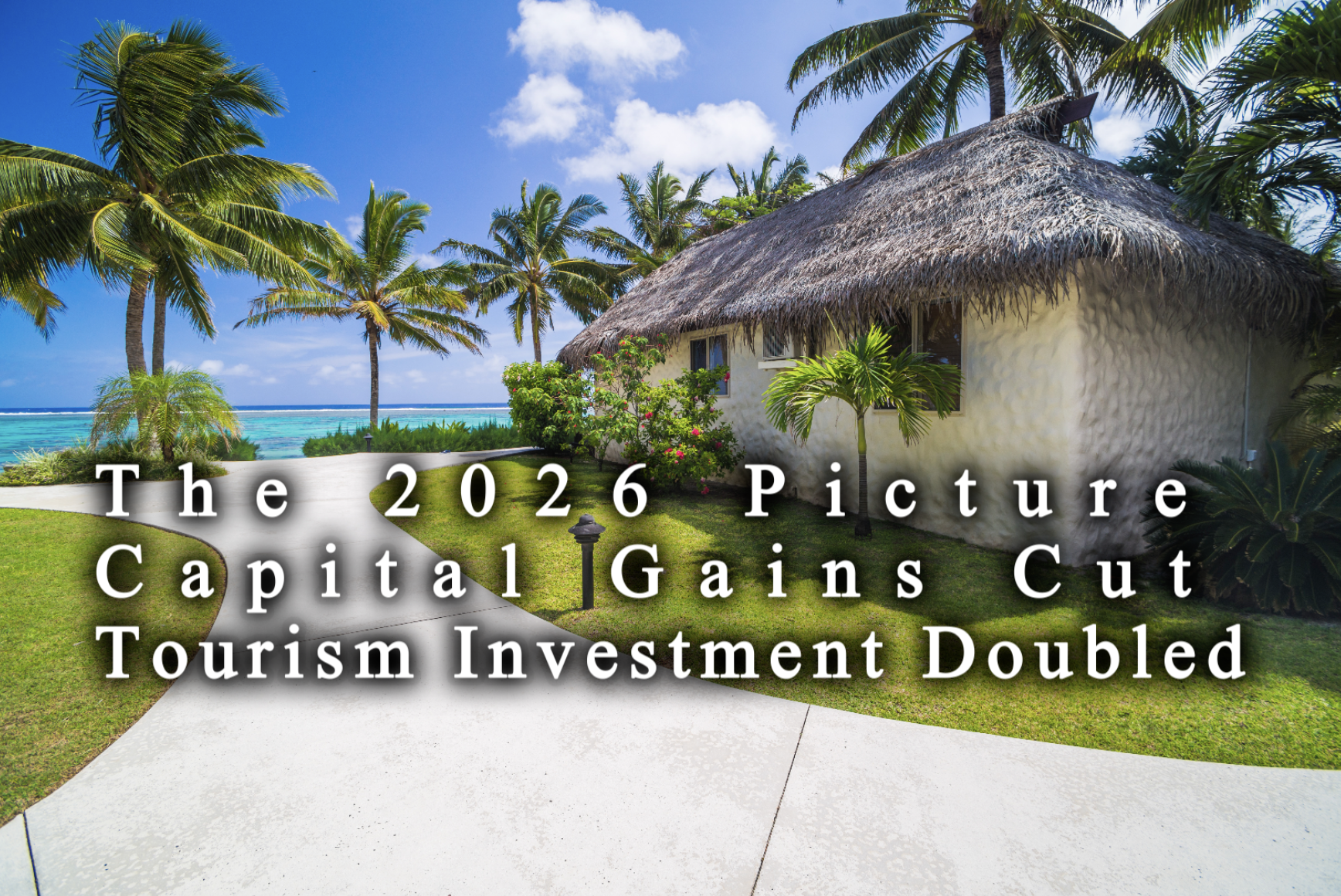
Most 'is now a good time to buy' articles are written when nothing has changed. This year is different: capital gains for individual sellers was cut to a flat 10% in June, and tourism investment commitments nearly doubled. Here is the honest 2026 picture.
Quick Answers
Is 2026 a good time to buy property in the Dominican Republic?
The fundamentals are unusually favourable this year. Capital gains for individual sellers was cut to a flat 10% in June 2026, tourism investment commitments nearly doubled at FITUR, and foreign ownership rights remain unrestricted.
As always, the answer depends more on your specific purchase than on the market — but the backdrop is genuinely supportive.
What changed in 2026 that matters most?
Law 30-26, enacted 18 June 2026, cut capital gains tax on real estate sold by individuals to a flat, final 10% — down from a scale topping out at 25% — and added exemptions for primary-residence reinvestment and sellers over 65.
That materially improves after-tax returns for anyone buying now and selling later, and most published guidance has not caught up with it.
How strong are the tourism fundamentals?
At FITUR 2026 the Dominican Republic signed approximately US$13.37 billion in tourism deals, nearly double the US$6.75 billion committed the prior year, backing around 10,000 new hotel rooms over three years.
The US Open Skies agreement has expanded flight access alongside it, which supports the visitor volume that underpins rental demand.
What are property prices doing?
Independent analysis projects annual condo price growth in the 3–8% range for 2026, with tourist-focused markets toward the higher end and urban markets more moderate.
Medium-term projections through 2030 sit at 3–7% annually, with beachfront and new development at the upper end of that range.
Is it better to buy new or resale right now?
Resale frequently wins on value in the current market, because rising material costs have pushed new-build pricing up while established communities' steepest appreciation has already occurred.
New construction still wins where CONFOTUR applies, since the transfer-tax and property-tax exemptions generally do not transfer on a resale.
How long do properties take to sell?
Around 120 days on average nationally to find a serious buyer, though well-priced properties in strong markets move in 60 to 100 days.
That matters for a buyer too — it means there is time to do proper due diligence without a genuinely good property disappearing.
What should a buyer be cautious about?
Generic off-plan condos far from the beach, overpriced inland properties, and anything with unclear title documentation — these are consistently identified as the weaker parts of the market.
The corresponding strength is well-located property in established communities with clean title, which is where demand concentrates.
Is the North Coast specifically well positioned?
It combines established infrastructure and proven rental demand with pricing that has not run as far as Punta Cana or Las Terrenas, and independent analysis notes it still offers room for growth.
Add an international airport 15–20 minutes from most of the corridor and a genuinely multinational resident community, and the case is strong.
What does the buying process cost and how long does it take?
Closing costs of roughly 4.5–8% including the 3% transfer tax, which CONFOTUR can waive entirely on qualifying units. A clean transaction completes in 30 to 60 days.
Only a passport is required to complete a purchase, with no residency or permit requirement for foreign buyers.
What is the honest bottom line for 2026?
Favourable tax treatment, strong tourism investment, moderate steady price growth, and unrestricted foreign ownership — a supportive backdrop rather than a frenzy.
That suits buyers doing careful due diligence far better than a hot market would, and it is a reasonable environment in which to take your time.
What actually changed this year
Most "is now a good time to buy" articles are written without anything specific having changed. This year is different, and the single biggest item is one that a great deal of published guidance still has wrong.
Law 30-26, enacted 18 June 2026, cut capital gains tax on real estate sold by individuals to a flat, final 10% — replacing a scale that topped out at 25%. It also introduced two new exemptions: primary residence where proceeds are reinvested within six months, and sellers over the age of 65 transferring a primary residence.
For anyone buying now with a view to selling later, that is a direct improvement to after-tax return. On a property bought at $400,000 and sold at $600,000, it is roughly the difference between $50,000 and $20,000 in tax — and closer to $8,000 once the available CPI cost-basis adjustment is applied.
The tourism backdrop
At FITUR 2026 the Dominican Republic signed approximately US$13.37 billion in tourism deals — close to double the US$6.75 billion committed the previous year — backing around 10,000 new hotel rooms over three years. The US Open Skies agreement has expanded flight access alongside it.
For a property buyer this matters because it underpins visitor volume, and visitor volume underpins rental demand, restaurant economies and service infrastructure. It is the kind of fundamental that smaller regional markets struggle to match.
Where prices are heading
| Measure | 2026 outlook |
|---|---|
| Condo price growth, 2026 | 3–8% annually; tourist markets toward the higher end |
| Medium-term through 2030 | 3–7% annually; beachfront and new development highest |
| Average time to find a serious buyer | ~120 days nationally |
| New builds as share of listings | ~35–45% in main buyer markets |
| Closing costs | 4.5–8%, waivable transfer tax under CONFOTUR |
| Transaction timeline | 30–60 days for a clean purchase |
Moderate, steady growth rather than a boom. That is a considerably better environment for a careful buyer than a frenzy — there is time to do proper due diligence without a good property vanishing in an afternoon.
New or resale, right now
Resale frequently wins on value in the current market. Material costs have risen, pushing new-build pricing up, while established communities' steepest appreciation period has already occurred. A well-maintained resale in a known community regularly beats a comparable new build on total cost — and completes in 30 to 60 days rather than months.
New construction still wins where CONFOTUR applies, because the exemption from the 3% transfer tax and up to 15 years of annual property tax generally does not survive a resale. On a $400,000 purchase the transfer-tax waiver alone is $12,000 before the annual savings start.
The right answer depends on the specific units you are comparing, which is exactly how it should be.
Where the market is weaker
Worth knowing, because it tells you what to avoid. Independent analysis consistently identifies the weaker segments as generic off-plan condos far from the beach, overpriced inland properties, and anything with unclear title documentation.
The mirror image is where demand concentrates: well-located property in established communities with clean, verified title. That is not a sophisticated insight, but it is where the market rewards buyers.
The North Coast's position
Established infrastructure and proven, measurable rental demand — combined with pricing that has not run as far as Punta Cana or Las Terrenas. Independent analysis notes the corridor still offers room for growth relative to more saturated markets.
Add an international airport 15 to 20 minutes from most communities, a hospital accepting most international insurance plans, an international school, and a genuinely multinational resident community spanning American, Canadian, German, French, Dutch and British owners — and you have somewhere that works as a place to live, not only as an asset.
The practical picture for a foreign buyer
Foreigners hold identical property rights to Dominican citizens. No permit, no visa, no residency requirement — a passport completes a purchase. Closing costs run 4.5–8%, and CONFOTUR can eliminate the largest component on qualifying units. Annual property tax applies at 1% only above roughly US$170,000–$182,000 in appraised value, so a substantial share of condos owe nothing.
And for anyone considering living here: three fast-track residency routes, the most accessible requiring US$1,500 a month in pension income, all granting permanent residency immediately with citizenship eligibility after two years.
The honest bottom line
Favourable tax treatment that improved materially this year, strong and growing tourism investment, moderate steady price appreciation, unrestricted foreign ownership, and light ongoing taxation. That is a supportive backdrop.
It is not a market where you need to move fast, and that is a feature rather than a limitation. Take the time to visit, rent a season if you can, retain your own attorney, and buy the right specific property rather than rushing to buy something.
Questions worth answering before you buy this year:
- "Am I comparing new and resale on total cost, including CONFOTUR where it applies?"
- "Is this in an established community with comparable sales, or a speculative location?"
- "Is the title clean and the deslinde registered, verified by my own attorney?"
- "Have I visited in low season as well as high?"
- "Am I structuring ownership sensibly given the new 10% individual capital gains rate?"
Sources and further reading:
Law 30-26 capital gains provisions verified against KPMG tax analysis and published Dominican legal guidance. FITUR 2026 investment commitments and hotel room pipeline sourced from published Dominican tourism reporting. Price growth projections, time-to-sale averages, new-build share of listings and market segment strength cross-checked across independent 2026 Dominican Republic market analyses. Closing costs, transfer tax, IPI thresholds and residency requirements verified against Dominican tax and immigration provisions. Confirm current figures with licensed Dominican professionals — this article is general information, not tax, legal or investment advice.
More from Blue Sail Realty: Buying Property Legally · Retiring in the DR · Cost of Living in Cabarete · Cabarete Airbnb Investment · The DR Safe-Buying Code · All North Coast Guides
About the author: James Oosterman, CIPS (Certified International Property Specialist), is Broker/CEO of Blue Sail Realty, headquartered in Cabarete on the Dominican Republic's North Coast. Read real client stories.
Most 'is now a good time to buy' articles are written when nothing has changed. This year is different: capital gains for individual sellers was cut to a flat 10% in June, and tourism investment commitments nearly doubled. Here is the honest 2026 picture.
Quick Answers
Is 2026 a good time to buy property in the Dominican Republic?
The fundamentals are unusually favourable this year. Capital gains for individual sellers was cut to a flat 10% in June 2026, tourism investment commitments nearly doubled at FITUR, and foreign ownership rights remain unrestricted.
As always, the answer depends more on your specific purchase than on the market — but the backdrop is genuinely supportive.
What changed in 2026 that matters most?
Law 30-26, enacted 18 June 2026, cut capital gains tax on real estate sold by individuals to a flat, final 10% — down from a scale topping out at 25% — and added exemptions for primary-residence reinvestment and sellers over 65.
That materially improves after-tax returns for anyone buying now and selling later, and most published guidance has not caught up with it.
How strong are the tourism fundamentals?
At FITUR 2026 the Dominican Republic signed approximately US$13.37 billion in tourism deals, nearly double the US$6.75 billion committed the prior year, backing around 10,000 new hotel rooms over three years.
The US Open Skies agreement has expanded flight access alongside it, which supports the visitor volume that underpins rental demand.
What are property prices doing?
Independent analysis projects annual condo price growth in the 3–8% range for 2026, with tourist-focused markets toward the higher end and urban markets more moderate.
Medium-term projections through 2030 sit at 3–7% annually, with beachfront and new development at the upper end of that range.
Is it better to buy new or resale right now?
Resale frequently wins on value in the current market, because rising material costs have pushed new-build pricing up while established communities' steepest appreciation has already occurred.
New construction still wins where CONFOTUR applies, since the transfer-tax and property-tax exemptions generally do not transfer on a resale.
How long do properties take to sell?
Around 120 days on average nationally to find a serious buyer, though well-priced properties in strong markets move in 60 to 100 days.
That matters for a buyer too — it means there is time to do proper due diligence without a genuinely good property disappearing.
What should a buyer be cautious about?
Generic off-plan condos far from the beach, overpriced inland properties, and anything with unclear title documentation — these are consistently identified as the weaker parts of the market.
The corresponding strength is well-located property in established communities with clean title, which is where demand concentrates.
Is the North Coast specifically well positioned?
It combines established infrastructure and proven rental demand with pricing that has not run as far as Punta Cana or Las Terrenas, and independent analysis notes it still offers room for growth.
Add an international airport 15–20 minutes from most of the corridor and a genuinely multinational resident community, and the case is strong.
What does the buying process cost and how long does it take?
Closing costs of roughly 4.5–8% including the 3% transfer tax, which CONFOTUR can waive entirely on qualifying units. A clean transaction completes in 30 to 60 days.
Only a passport is required to complete a purchase, with no residency or permit requirement for foreign buyers.
What is the honest bottom line for 2026?
Favourable tax treatment, strong tourism investment, moderate steady price growth, and unrestricted foreign ownership — a supportive backdrop rather than a frenzy.
That suits buyers doing careful due diligence far better than a hot market would, and it is a reasonable environment in which to take your time.
What actually changed this year
Most "is now a good time to buy" articles are written without anything specific having changed. This year is different, and the single biggest item is one that a great deal of published guidance still has wrong.
Law 30-26, enacted 18 June 2026, cut capital gains tax on real estate sold by individuals to a flat, final 10% — replacing a scale that topped out at 25%. It also introduced two new exemptions: primary residence where proceeds are reinvested within six months, and sellers over the age of 65 transferring a primary residence.
For anyone buying now with a view to selling later, that is a direct improvement to after-tax return. On a property bought at $400,000 and sold at $600,000, it is roughly the difference between $50,000 and $20,000 in tax — and closer to $8,000 once the available CPI cost-basis adjustment is applied.
The tourism backdrop
At FITUR 2026 the Dominican Republic signed approximately US$13.37 billion in tourism deals — close to double the US$6.75 billion committed the previous year — backing around 10,000 new hotel rooms over three years. The US Open Skies agreement has expanded flight access alongside it.
For a property buyer this matters because it underpins visitor volume, and visitor volume underpins rental demand, restaurant economies and service infrastructure. It is the kind of fundamental that smaller regional markets struggle to match.
Where prices are heading
| Measure | 2026 outlook |
|---|---|
| Condo price growth, 2026 | 3–8% annually; tourist markets toward the higher end |
| Medium-term through 2030 | 3–7% annually; beachfront and new development highest |
| Average time to find a serious buyer | ~120 days nationally |
| New builds as share of listings | ~35–45% in main buyer markets |
| Closing costs | 4.5–8%, waivable transfer tax under CONFOTUR |
| Transaction timeline | 30–60 days for a clean purchase |
Moderate, steady growth rather than a boom. That is a considerably better environment for a careful buyer than a frenzy — there is time to do proper due diligence without a good property vanishing in an afternoon.
New or resale, right now
Resale frequently wins on value in the current market. Material costs have risen, pushing new-build pricing up, while established communities' steepest appreciation period has already occurred. A well-maintained resale in a known community regularly beats a comparable new build on total cost — and completes in 30 to 60 days rather than months.
New construction still wins where CONFOTUR applies, because the exemption from the 3% transfer tax and up to 15 years of annual property tax generally does not survive a resale. On a $400,000 purchase the transfer-tax waiver alone is $12,000 before the annual savings start.
The right answer depends on the specific units you are comparing, which is exactly how it should be.
Where the market is weaker
Worth knowing, because it tells you what to avoid. Independent analysis consistently identifies the weaker segments as generic off-plan condos far from the beach, overpriced inland properties, and anything with unclear title documentation.
The mirror image is where demand concentrates: well-located property in established communities with clean, verified title. That is not a sophisticated insight, but it is where the market rewards buyers.
The North Coast's position
Established infrastructure and proven, measurable rental demand — combined with pricing that has not run as far as Punta Cana or Las Terrenas. Independent analysis notes the corridor still offers room for growth relative to more saturated markets.
Add an international airport 15 to 20 minutes from most communities, a hospital accepting most international insurance plans, an international school, and a genuinely multinational resident community spanning American, Canadian, German, French, Dutch and British owners — and you have somewhere that works as a place to live, not only as an asset.
The practical picture for a foreign buyer
Foreigners hold identical property rights to Dominican citizens. No permit, no visa, no residency requirement — a passport completes a purchase. Closing costs run 4.5–8%, and CONFOTUR can eliminate the largest component on qualifying units. Annual property tax applies at 1% only above roughly US$170,000–$182,000 in appraised value, so a substantial share of condos owe nothing.
And for anyone considering living here: three fast-track residency routes, the most accessible requiring US$1,500 a month in pension income, all granting permanent residency immediately with citizenship eligibility after two years.
The honest bottom line
Favourable tax treatment that improved materially this year, strong and growing tourism investment, moderate steady price appreciation, unrestricted foreign ownership, and light ongoing taxation. That is a supportive backdrop.
It is not a market where you need to move fast, and that is a feature rather than a limitation. Take the time to visit, rent a season if you can, retain your own attorney, and buy the right specific property rather than rushing to buy something.
Questions worth answering before you buy this year:
- "Am I comparing new and resale on total cost, including CONFOTUR where it applies?"
- "Is this in an established community with comparable sales, or a speculative location?"
- "Is the title clean and the deslinde registered, verified by my own attorney?"
- "Have I visited in low season as well as high?"
- "Am I structuring ownership sensibly given the new 10% individual capital gains rate?"
Sources and further reading:
Law 30-26 capital gains provisions verified against KPMG tax analysis and published Dominican legal guidance. FITUR 2026 investment commitments and hotel room pipeline sourced from published Dominican tourism reporting. Price growth projections, time-to-sale averages, new-build share of listings and market segment strength cross-checked across independent 2026 Dominican Republic market analyses. Closing costs, transfer tax, IPI thresholds and residency requirements verified against Dominican tax and immigration provisions. Confirm current figures with licensed Dominican professionals — this article is general information, not tax, legal or investment advice.
More from Blue Sail Realty: Buying Property Legally · Retiring in the DR · Cost of Living in Cabarete · Cabarete Airbnb Investment · The DR Safe-Buying Code · All North Coast Guides
About the author: James Oosterman, CIPS (Certified International Property Specialist), is Broker/CEO of Blue Sail Realty, headquartered in Cabarete on the Dominican Republic's North Coast. Read real client stories.
Want to see Blue Sail Realty first next time you search? Add us as a preferred source on Google.
Change Currency
USD- USD
- EUR
- CAD
Change Measurement
square meters - m2- square feet - ft2
- square meters - m2
- acres - ac
- square yards - yd2
- hectares - ha
Our Listings
- Affordable Property(46)
- Condos(167)
- Land(10)
- Commercial(11)
- Luxury Property(131)
- Residential(90)
- Villas(147)
Featured Properties
 Luxury 3-Bedroom Oceanview Villa fo... $ 375,000
Seller Financing Available: Furnish... $ 349,000
Oceanside Luxury Villa, Cabarete — ... $ 385,000
Luxury 3-Bedroom Oceanview Villa fo... $ 375,000
Seller Financing Available: Furnish... $ 349,000
Oceanside Luxury Villa, Cabarete — ... $ 385,000-
Mortgage Calculator
-
Login
Register
A password will be e-mailed to you
Reset Password
Social Links: