You can buy property, get medical care, send children to school and run a daily life on the North Coast entirely in English. Here is where that genuinely holds, where it doesn't, and the thing about Dominican Spanish that catches every learner out.
Quick Answers
Do I need to speak Spanish to live on the North Coast?
No, and this corridor is genuinely unusual in that respect. English is widely spoken in private medical practice, in real estate and legal services, and across the established gated communities.
That is area-specific rather than nationally true, and it is one of the practical advantages of a corridor that has served an international resident population for decades.
What languages will I actually hear?
Spanish first, then English, German, French and Dutch. The North Coast's foreign owner base is genuinely multinational rather than a single-nationality enclave.
You will hear all of them in a single afternoon in Sosúa or Cabarete.
Do doctors speak English?
Widely, yes, in private practice across this corridor — along with German and French in some clinics, reflecting the area's owner mix.
Sosúa's international hospital accepts most international insurance plans, and Centro Médico Cabarete serves the corridor's hillside communities.
Do I need Spanish for the property purchase?
Not to complete it. Dominican attorneys serving international buyers work in English routinely, and remote closings for North American and European buyers are standard practice.
One requirement is absolute though: any document not in Spanish must be translated by a certified Dominican legal interpreter — not by a translator at home.
Where will Spanish actually matter?
Dealing with tradespeople, utilities offices, government departments, local markets, and anywhere outside the expat corridor.
It also changes the price you pay for informal services, and it changes the quality of the relationships you build with people who live here.
How much Spanish is enough?
Enough to greet people, order food, give an address, negotiate a price and apologise for your Spanish. That covers most daily interactions and is achievable in a few months of casual effort.
Fluency is not necessary. Effort is noticed and reciprocated.
Is Dominican Spanish different?
Yes, noticeably. It is fast, with dropped final consonants — 'para' becomes 'pa'', 'está' becomes 'ta'' — and a distinct vocabulary.
Learners who trained on Spain or Mexico Spanish often understand written Dominican Spanish easily and struggle with the spoken version at first. It comes with exposure.
Can my children go to school in English?
Sosúa has an international school alongside other private options, which is one of the concrete reasons families with school-age children concentrate in and around that town.
Children in the corridor grow up in a genuinely mixed-language environment, which most families experience as a significant benefit.
Will not speaking Spanish limit my experience?
It will limit the depth rather than the function. You can live comfortably without it. You will know the place less well, and you will pay more for some things.
Most long-term residents describe learning some Spanish as the change that shifted them from living beside the country to living in it.
What is the honest summary?
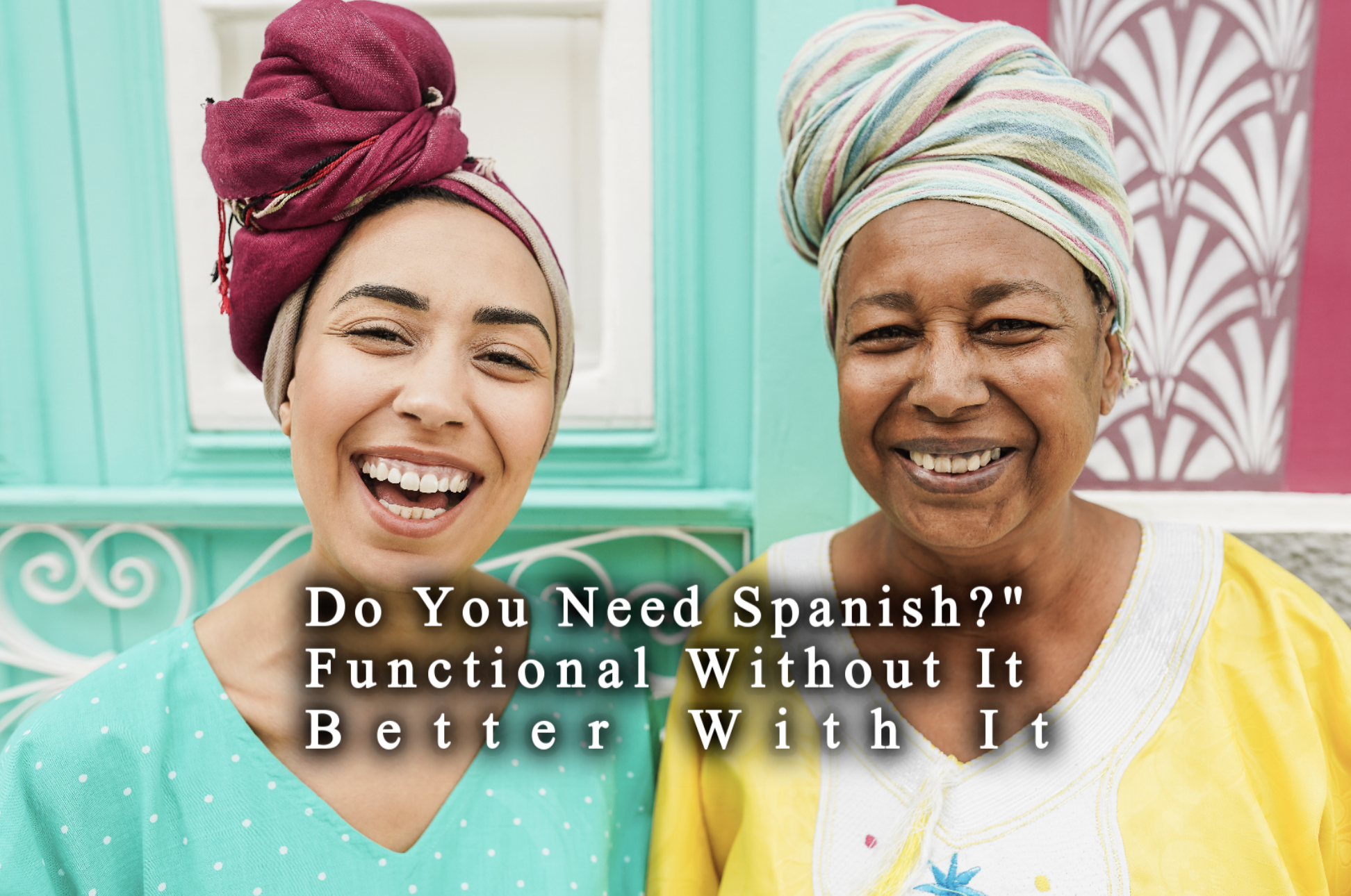
You do not need Spanish to buy, live, get medical care or send children to school on this coast. You will get considerably more out of it if you learn some.
That combination — functional without it, better with it — is a genuine advantage of an established international corridor over a newer or more remote one.
The straight answer
No, you do not need Spanish to live on the Dominican North Coast. You can buy property, get medical care, send children to school, hire tradespeople and run a daily life entirely in English.
That is not true everywhere in the Dominican Republic. It is true here, and the reason is specific: the Sosúa–Cabarete corridor has served an international resident population for decades, and the services grew up around that.
Where English genuinely works
- Private medical practice — widely, across the corridor, along with German and French in some clinics
- Real estate and legal services — Dominican attorneys serving international buyers work in English routinely
- Established gated communities — management and administration typically operate in English
- Restaurants and businesses in Sosúa and Cabarete serving the resident and visitor population
- Schools — Sosúa has an international school alongside other private options
The corridor's owner base is genuinely multinational — American, Canadian, German, French, Dutch and British are all common. You will hear four or five languages in an afternoon.
Where Spanish actually matters
Being honest about the gap:
- Tradespeople. Plumbers, electricians, gardeners, builders. This is where most residents first feel the limitation.
- Utilities and government offices. Anything administrative outside a service built for foreigners.
- Local markets and colmados. Where the good prices are.
- Anywhere outside the corridor. Puerto Plata city, the interior, the southwest.
- Price. Not dramatically, but consistently — for informal services, negotiated work, and things without a posted rate.
How much is enough
Considerably less than people assume. Enough to greet someone properly, order food, give an address to a driver, ask what something costs, negotiate a price, and apologise for your Spanish.
That covers most daily interaction and is achievable in a few months of casual effort. Fluency is not the target. Effort is noticed here, and it is reciprocated.
The thing that surprises learners
Dominican Spanish is fast, and it drops consonants. Final and internal 's' sounds disappear routinely. Para becomes pa'. Está becomes 'ta. Los dos can sound like lo do'.
Anyone who learned Spanish from Spain or Mexico frequently reads Dominican Spanish comfortably and understands almost nothing spoken at first. That is normal and it passes with exposure — but it is worth knowing before you conclude your Spanish is worse than it is.
There is also distinct vocabulary. A guagua is a bus. A colmado is a corner shop and social institution. A motoconcho is a motorcycle taxi.
For families
Sosúa's international school is one of the concrete reasons families with school-age children concentrate in and around that town rather than further along the corridor. Alongside it sit other private options.
Children here grow up in a genuinely mixed-language environment, which most families report as a significant benefit — though it is worth thinking deliberately about long-term schooling continuity, particularly what happens at secondary level and how qualifications transfer.
The purchase itself
Entirely manageable in English. Dominican attorneys serving international buyers handle transactions in English constantly, and remote closings for North American and European buyers are routine.
One requirement is absolute and catches people out: any document not in Spanish must be translated by a certified Dominican legal interpreter. Not by a professional translator at home, however competent. Not by a bilingual friend. By an interpreter certified in the Dominican Republic. Buyers arrive at closing with perfectly good translations that cannot be used.
The honest summary
You will function without Spanish. You will know the place better with it.
Most long-term residents describe learning some as the change that moved them from living beside the Dominican Republic to living in it — better relationships with the people who fix things, better prices, better understanding of what is actually going on around them.
It is not a requirement. It is the difference between two versions of the same life.
Practical language questions before moving:
- "Does this community's management operate in English?"
- "Do the doctors and clinics near this property speak English?"
- "Who will I use for tradespeople, and how will I communicate with them?"
- "If I have children — what are the school options and what language do they teach in?"
- "Is my attorney comfortable working in English throughout the transaction?"
Sources and further reading:
Language prevalence in private medical practice, professional services and gated communities reflects Sosúa–Cabarete corridor conditions verified during research. Dominican Spanish phonological characteristics and regional vocabulary verified against public linguistic sources. Certified Dominican legal interpreter requirement for non-Spanish documents verified against published Dominican conveyancing guidance. School availability reflects corridor conditions verified during research.
More from Blue Sail Realty: Buying Property Legally · Retiring in the DR · Cost of Living in Cabarete · Cabarete vs Sosúa · The DR Safe-Buying Code · All North Coast Guides
About the author: James Oosterman, CIPS (Certified International Property Specialist), is Broker/CEO of
Blue Sail Realty, headquartered in Cabarete on the Dominican Republic's North Coast.
Read real client stories.