Quick answers
- Where can I find beachfront property for sale in the DR? No single site covers it reliably — the country has no unified MLS, so listings are scattered across local agency sites and developer offices by coastal area.
- Why don’t big international real estate sites work well here? They generally pull from MLS data feeds, and the Dominican Republic doesn’t have one, so their DR beachfront coverage is thin and often outdated.
- Is DR beachfront property a good investment? Generally yes — scarcity supports appreciation, and areas like Kite Beach/Cabarete Bay show estimated 7-12% rental yields, Bayahibe around 11.6%, though actual returns vary.
- Oceanfront vs. marina-front? Oceanfront (like Cap Cana’s Caleton/Juanillo) means direct beach access and top rental appeal but more salt exposure; marina-front (like Marina Cap Cana) means calmer water and dock access, less salt spray, no open-ocean frontage.
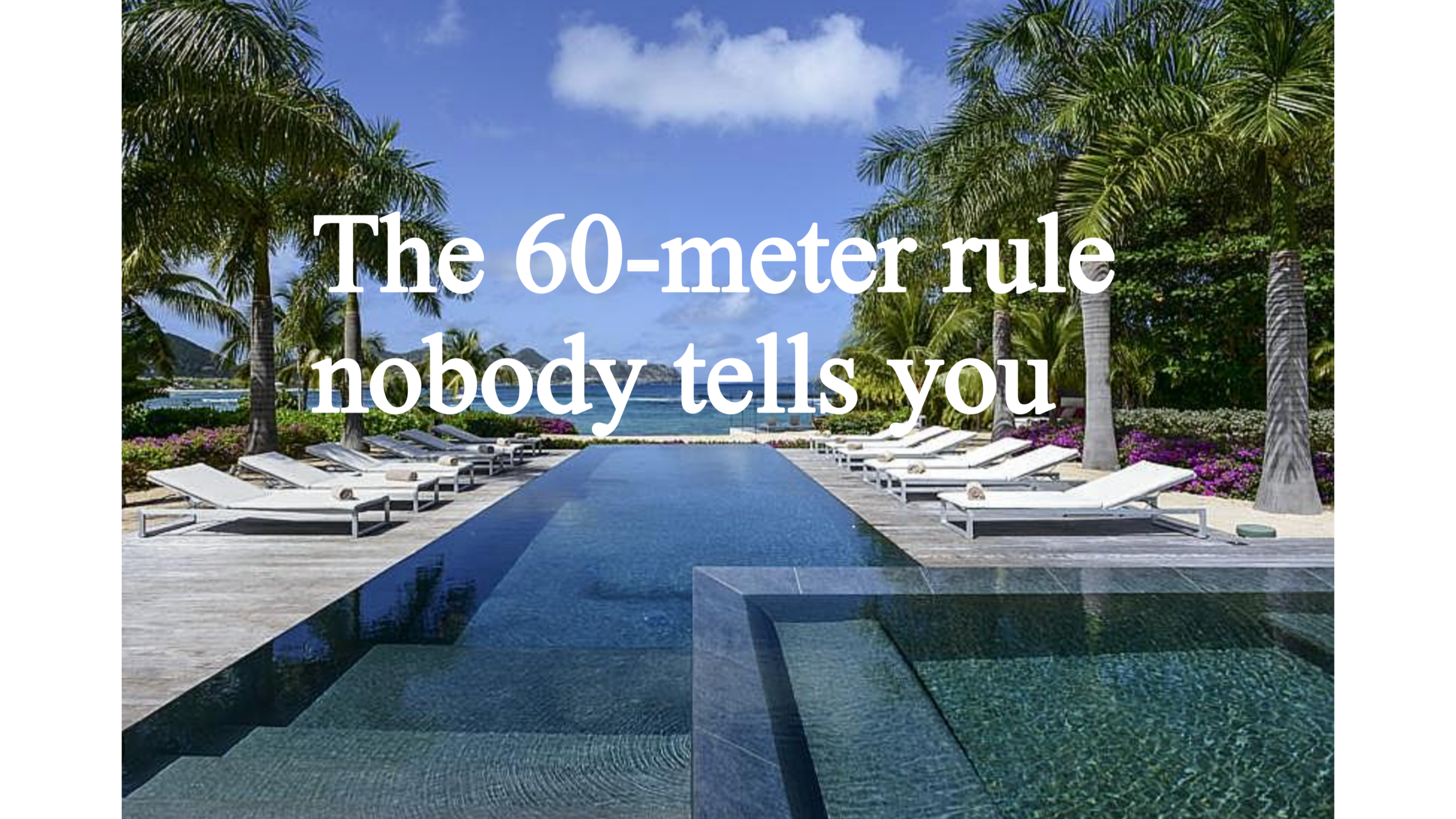
- What’s the 60-meter rule? A maritime zone extending up to 60 meters inland from the high tide line, treated as public domain — the exact setback (0-60m) depends on when the parcel was privatized.
- What environmental risks matter? Erosion patterns, elevation relative to hurricane season (June-November), and confirming wind/storm-surge coverage with a local Dominican insurer.
- How do I protect a coastal home from salt damage? Marine-grade 316 stainless fixtures, elastomeric exterior paint, regular fresh-water rinsing, and periodic inspection of hinges, HVAC units, and window seals.
- How does financing work here? Dominican bank mortgages generally need 30-50% down at 8-13% USD interest; standard US/European mortgages don’t apply directly, so buyers use local bank financing, seller financing, or home equity instead.
- Which areas have real beachfront inventory? Cabarete-Sosua (Kite Beach, Cabarete Bay, Perla Marina, Sea Horse Ranch), Cap Cana (Caleton, Juanillo), Las Terrenas, and Bayahibe.
- What should I verify before buying? Title status through the Registro Inmobiliario, the exact setback that applies, whether it’s truly beachfront, and use your own independent attorney.
- Does Blue Sail Realty sell beachfront property? Yes, across the Cabarete-Sosua corridor and greater Punta Cana, including Cap Cana.
Searching “beachfront property for sale” and expecting one comprehensive website to show it all works reasonably well in a lot of countries — but not in the Dominican Republic. The single biggest reason is structural: there’s no countrywide multiple listing service here, so no website, however large, actually aggregates what’s genuinely on the market along the coast. Beyond simply finding a listing, buying on the Dominican coast also means understanding a different set of legal, environmental, and financing realities than an inland purchase — or a beachfront purchase somewhere with a mature MLS system.
Where Can I Actually Find Beachfront Property for Sale in the Dominican Republic?
Dominican beachfront listings live in a lot of different places at once: individual local agency and brokerage websites, developer sales offices selling directly out of new construction, and a fair amount of word-of-mouth inventory that never gets listed publicly at all. Because there’s no unified MLS feeding a central database, no single search produces a complete picture — the same property is sometimes listed by more than one agent at different prices, and freshly available inventory can sell before it’s ever posted online.
In practice, this means a locally based agent who actively works a specific stretch of coastline is usually more useful than any search website, simply because that agent has visibility into inventory that a portal never sees.
Why Don’t Large International Real Estate Websites Work Well Here?
Big property portals and listing aggregators — the kind that dominate results for broad, US-centric or international searches — generally work by pulling listings from a country’s MLS data feed. That’s an efficient model in markets that have one. The Dominican Republic doesn’t, which means those same sites typically end up showing only a partial, often outdated slice of what’s actually for sale on any given stretch of Dominican coastline. A listing might be sold, price-changed, or brand new and simply never appear, because it was never fed into a system those sites read from in the first place. This isn’t a flaw specific to any one platform — it’s a structural mismatch between how those tools are built and how the Dominican market actually operates.
Is Beachfront Property in the Dominican Republic Actually a Good Investment?
Generally, yes, and for the same core reason waterfront property holds value everywhere: there’s a fixed amount of coastline, which supports long-term appreciation as demand grows. In the Dominican Republic specifically, that scarcity is paired with strong short-term rental demand from tourists willing to pay a premium for direct beach access. North coast areas around Kite Beach and Cabarete Bay have shown estimated rental yields in the range of 7-12%, while Bayahibe near La Romana has shown estimated yields around 11.6% – though actual returns depend heavily on the specific property, how it’s managed, and seasonal occupancy patterns, so these figures should be treated as a general reference point rather than a guarantee.
Oceanfront vs. Marina-Front: What’s the Actual Difference in the Dominican Republic?
Buyers researching Dominican coastal property often assume “waterfront” means one thing, but the experience differs meaningfully depending on whether a property faces the open ocean or a protected marina:
- Oceanfront property – like homes along Cap Cana’s Caleton and Juanillo beaches, or Kite Beach and Cabarete Bay on the north coast – offers direct beach access, the most dramatic views, and the strongest short-term rental appeal. The tradeoff is greater exposure to wind, salt spray, and the maintenance costs that come with it.
- Marina-front property – the clearest Dominican example being homes along Marina Cap Cana – offers calmer water, potential private dock access for boat owners, and meaningfully less wind and salt exposure than open-ocean frontage. What it doesn’t offer is direct beach access or the same open-water views.
Neither is objectively better – it depends on whether a buyer’s priority is beach access and rental income potential, or a calmer, boating-oriented lifestyle with lower maintenance demands.
What Is the Dominican Republic’s 60-Meter Coastal Setback Rule?
This is one of the most misunderstood pieces of Dominican beachfront real estate, and it matters more than most buyers realize before they start looking. Dominican law establishes a maritime zone extending up to 60 meters inland from the high tide line. Within that zone, construction is generally prohibited – the law treats it as public domain, not private property, meaning the public can legally pass through it by land or water regardless of who owns the adjacent land. This is a stronger version of the “beach access easement” concept buyers may be familiar with from other countries: rather than a narrow right-of-way across private beach frontage, the entire maritime zone itself is legally public.
The nuance buyers need to understand: the setback that actually applies to a specific parcel depends on when that land first passed from state to private ownership, not on its current appearance:
- Privatized before 1920: no setback applies
- Privatized 1920-1957: 5-meter setback
- Privatized 1957-1968: 20-meter setback
- Privatized after 1968: 60-meter setback
In other words, two beachfront lots sitting right next to each other can have completely different buildable areas depending on their individual title history. This is exactly the kind of detail a generic listing site won’t tell you – and exactly why title research matters as much as the sale price when evaluating a “beachfront” listing.
What Environmental Risks Should I Evaluate Before Buying?
Coastal property anywhere carries environmental considerations beyond a standard inland purchase, and the Dominican Republic is no exception:
- Coastal erosion: ask specifically whether the shoreline in front of a listing has been assessed by a coastal engineer, and whether the beach has been stable or receding in recent years.
- Hurricane season: the Dominican Republic’s Atlantic hurricane season runs June through November. The country has experienced major storms historically, including Hurricane David (1979, Category 5), Hurricane Georges (1998), and Hurricane Jeanne (2004), so elevation and construction quality relative to storm exposure are worth confirming for any beachfront listing.
- Insurance coverage: the Dominican Republic doesn’t use a FEMA-style flood zone mapping system the way the US does, so buyers should confirm directly with a local Dominican insurance broker exactly what a policy covers for wind and storm surge specifically, rather than assuming a standard homeowner policy includes it.
How Do I Protect a Coastal Home From Salt Air and Storm Damage?
Salt air is genuinely harder on building materials than an inland environment, and it’s worth budgeting for as ongoing maintenance rather than a one-time concern:
- Use marine-grade 316 stainless steel for outdoor fixtures, railings, and hardware, since standard stainless corrodes faster in salt air.
- Apply elastomeric, waterproof paint to exterior walls to help resist moisture and salt penetration.
- Rinse the home’s exterior with fresh water regularly to wash away accumulated salt deposits.
- Inspect hinges, HVAC units, and window seals periodically for early signs of corrosion, since these tend to show wear before more visible damage appears.
How Does Financing a Beachfront Property in the DR Differ From a Typical Home Loan?
Traditional US or European mortgages generally don’t apply directly to a Dominican purchase. Foreign buyers instead have two realistic paths: a Dominican bank mortgage, or financing arranged directly with the seller. Bank financing is available through institutions like Banco Popular Dominicano, Scotiabank Dominican Republic, and Banco Lopez de Haro, typically requiring a 30-50% down payment and carrying 8-13% interest on USD-denominated loans. Seller financing typically involves a 40-50% down payment and 6-8% interest over a shorter 3-7 year term. A full comparison of how each option works is covered in our dedicated guide to Dominican Republic property financing.
Which Dominican Republic Coastal Areas Actually Have Active Beachfront Inventory?
Beachfront turnover isn’t evenly spread across the country. A handful of areas account for most of the genuine activity:
- Cabarete and Sosua (north coast): including Kite Beach, Cabarete Bay, Perla Marina, and the gated Sea Horse Ranch community – driven heavily by the area’s kitesurfing and windsurfing reputation.
- Cap Cana, greater Punta Cana: particularly the Caleton and Juanillo beach areas, generally at a higher price point given the surrounding resort infrastructure, alongside the marina-front option at Marina Cap Cana.
- Las Terrenas, Samana peninsula: a smaller, more boutique beachfront market with a distinct laid-back, less resort-dense character.
- Bayahibe, near La Romana: close to Casa de Campo and the gateway to Isla Saona, with its own separate inventory and pricing.
Each of these areas has a genuinely different buyer profile, price range, and inventory pace – which is another reason a single generic search rarely serves someone well; the right approach usually starts with narrowing to a specific area first.
What Should I Verify Before Buying “Beachfront” Property in the DR?
- Title status: confirm ownership and any liens directly through the Registro Inmobiliario (the Dominican title registry), independent of anything the seller or listing agent tells you.
- The actual applicable setback: ask specifically when the parcel was privatized, since that determines the real buildable area, not just how the lot looks today.
- Whether it’s genuinely beachfront: “beachfront,” “beach access,” and “steps to the beach” get used loosely in marketing – confirm the actual distance and any physical barriers (roads, other parcels) between the property and the sand.
- Independent legal representation: use your own attorney, not one recommended solely by the seller or agent, particularly given how much the setback and title nuances above can vary parcel to parcel.
Finding Beachfront Property in the Dominican Republic with Blue Sail Realty
Blue Sail Realty, based in Cabarete, actively sells beachfront and near-beachfront property across the Cabarete-Sosua corridor and the greater Punta Cana area, including Cap Cana – backed by nearly two decades of experience on the ground and a public, verifiable 5.0 rating on Google Reviews. Because so much of what actually matters in a Dominican beachfront purchase – title history, the applicable setback, environmental exposure, and which listings are genuinely current – depends on local knowledge rather than what shows up in a general search, working directly with an agent active in the specific area is usually the more reliable starting point.
See also our related guides on legal due diligence for Dominican Republic properties and real estate in the Dominican Republic for 2026.
About the Author
James Oosterman is the Owner & Broker of Blue Sail Realty, a CIPS-Certified International Property Specialist (Certified International Property Specialist, a designation from the National Association of REALTORS® for agents specializing in cross-border transactions) with nearly two decades of active real estate experience on the Dominican Republic’s north coast, working directly with buyers and sellers across Cabarete, Sosua, Punta Cana, and Santo Domingo, backed by a public, verifiable 5.0 rating on Google Reviews.
Sources
- DR1.com forum discussion on the Dominican Republic’s maritime zone / 60-meter coastal setback rule
📞 Blue Sail Realty | Dominican Republic
💬 DM for private showing or virtual tour
🔗 Link in bio for full details
Blue Sail Realty Dominican Republic