Updated 15 October 2026
Buying land to build on is how many owners get exactly the home and view they want in the Dominican Republic — and it is the purchase where careful checks matter most. Here's the real picture: the types of land for sale, what land costs, how it is measured, the title and survey you must have, access, water and power, permits, and what building costs.
Quick Answers
Can foreigners buy land in the Dominican Republic?
Yes, with the same rights as Dominican nationals: building lots, beachfront and ocean-view land, and larger rural tracts, all on a registered Certificado de Título in your own name.
No residency, permit or local partner is required.
The rules on title, survey and environment apply equally to every buyer.
What does land cost?
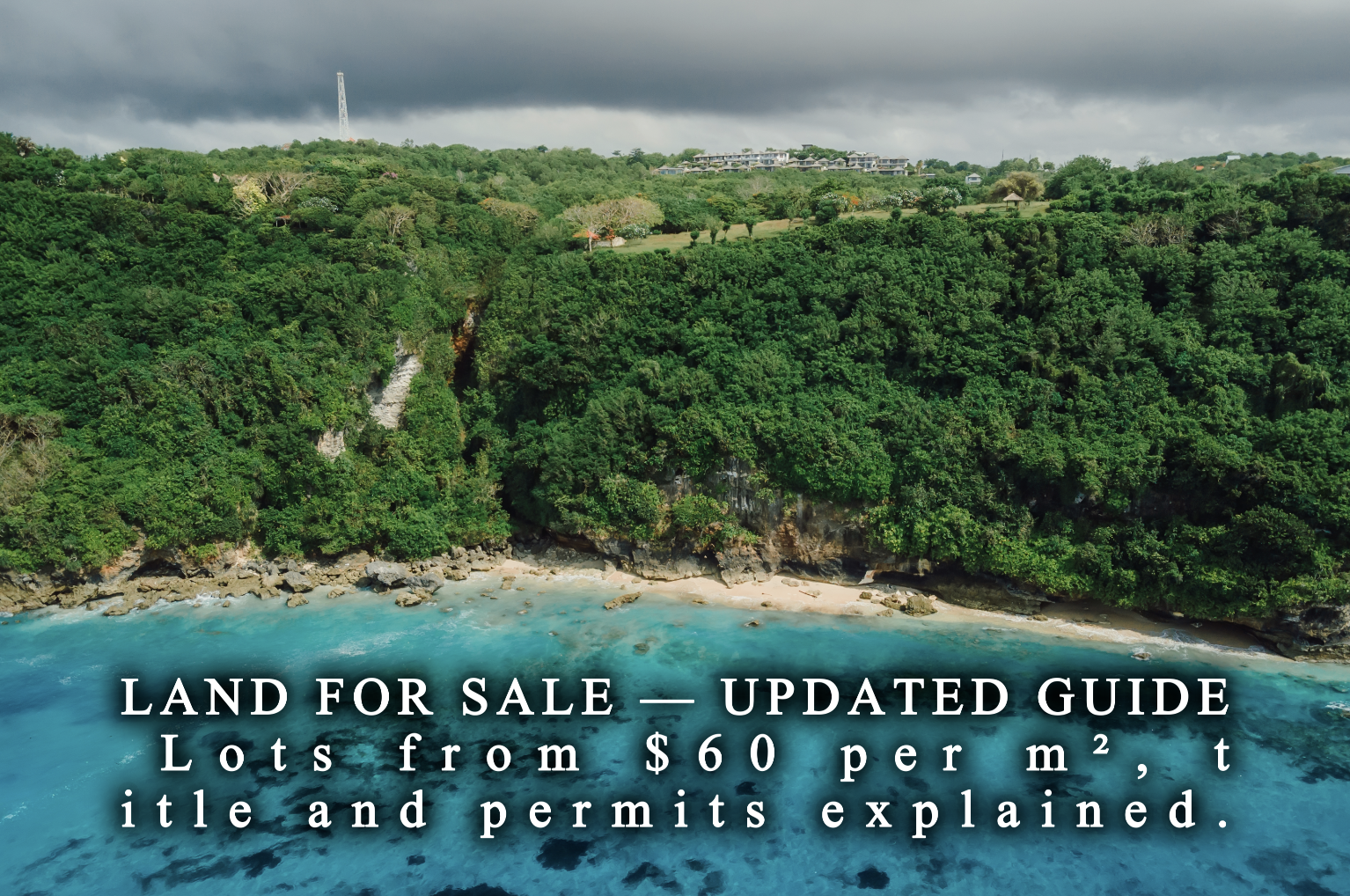
On the North Coast, hillside ocean-view lots on the Sosúa–Cabarete corridor sell at $60 to $100 per square metre on completed transactions.
Beachfront land costs considerably more, and inland or rural land considerably less, depending on access, views and services.
Comparable sales of similar land nearby are the reference for any offer.
How is land measured?
In tareas. One tarea is 628.86 square metres, about 0.155 acres, and Dominican land is commonly quoted that way.
A 2-tarea lot is about 1,258 square metres — room for a generous villa, garden and pool.
The tarea count in the contract must match the surveyed area on the title.
What is the single most important check?
A registered Certificado de Título with a completed deslinde — the judicially approved survey that individualises the lot.
Since 4 April 2009, transfers of land without a completed deslinde are not registered, so a lot still held as part of a larger undivided parcel on a Constancia Anotada cannot be transferred to you until its deslinde is complete.
Your independent attorney also confirms the land is not an agrarian-reform parcel, which cannot be freely sold.
What about access, water and power?
Access must be a registered right of way to a public road, not an informal track; water must come from a confirmed source with adequate dry-season supply; and power needs a grid connection or a solar plan.
Many North Coast homes run backup power — an inverter, a generator or both — and Law 57-07 supports solar with net metering.
These are confirmed before contract, because they decide whether a beautiful lot is a buildable one.
Are there environmental limits?
Yes, where land sits near the coast, rivers, mangroves or protected areas.
The first 60 metres from the high-water mark is public state land that cannot be built on; mangroves are protected; and Law 64-00 and Law 202-04 govern environmental authorisation and protected areas.
Your attorney confirms the environmental position before you sign.
What permits does building need?
A construction permit from the Ministry of Public Works (MOPC) and the municipality, plus environmental authorisation where the project requires it.
Structures are designed to MOPC's seismic regulation R-001, in force since 2011.
An established builder sequences the permits before work starts.
What does building cost?
Construction runs from about $580 to over $3,000 per square metre depending on specification; a 250 m² mid-range villa costs about $275,000 to $400,000 to build.
Imported furnishings carry duties plus 18% ITBIS, so many owners furnish locally.
The building guide sets out the process and the contract protections.
What does buying land cost?
4% of the price — a 3% transfer tax plus a 1% legal fee that Blue Sail Realty covers at closing.
Annual property tax applies at 1% only on combined holdings above RD$10,695,494 for 2026, about US$182,000.
Registered title also protects an absentee owner: under Law 108-05, registered land cannot be acquired by occupation.
Is now a good time to buy land?
Demand for property is rising: foreign direct investment in Dominican real estate reached US$915.2 million in 2025, up 14.6% (Banco Central / ONE), and North Coast tracked foreign-buyer closings rose 9% in Q1 2026 and 12% in Q2.
Land near the busiest corridors is finite, and more than US$1 billion of luxury tourism investment has been announced at Playa Grande on the coast east of Cabarete (El Día).
Buyers who build add the construction timeline to their plan.
Land at a Glance
The essentials: Hillside ocean-view lots $60–$100 per m² on the North Coast; 1 tarea = 628.86 m²; title must be a Certificado de Título with completed deslinde; a 250 m² mid-range villa costs about $275,000–$400,000 to build.
| Type of land |
Character |
Key checks |
| Building lot in a community | Services in place, community rules | Title, deslinde, community fee and rules |
| Hillside ocean-view lot | Views and breeze | Access road, slope, drainage, water |
| Beachfront land | Scarce, highest price | 60-metre public zone, environment |
| Rural tract or finca | Space and privacy | Agrarian-reform origin, access, water |
The Land Checklist
| Check |
What to confirm |
| Title | Certificado de Título in the seller's name, no charges |
| Survey | Deslinde complete; tareas match the contract |
| Origin | Not an agrarian-reform parcel |
| Access | Registered right of way |
| Water and power | Confirmed source; grid or solar |
| Environment | Coastal zone, mangroves, protected areas |
| Permits | MOPC, municipality, environmental authorisation |
From Land to Home
| Stage |
Typical |
| Lot | $60–$100 per m² (North Coast hillside) |
| Design and permits | Architect, MOPC and municipal approval |
| Build | $580 to $3,000+ per m²; 250 m² villa ~$275,000–$400,000 |
| Furnishing | Local sourcing; imports carry duties plus 18% ITBIS |
Methodology
Lot prices and build costs per completed Blue Sail Realty transactions and North Coast market data. Tarea measurement standard. Title, deslinde (effective 4 April 2009) and imprescriptibility per Law 108-05. Agrarian-reform restrictions per Dominican agrarian legislation. Environmental law per Law 64-00 and Law 202-04; renewable incentives per Law 57-07; seismic code MOPC R-001. Investment per Banco Central / ONE; closings per Dominican Today (August 2026); Playa Grande investment per El Día (2026). Search demand per the uploaded keyword file. Taxes per DGII. Reviewed quarterly.
Questions worth asking about any land:
- "Is the deslinde complete, and do the tareas match?"
- "Is it an agrarian-reform parcel?"
- "Is access a registered right of way?"
- "Where will water and power come from?"
- "What permits will my build need?"
Sources and further reading:
Dominican Today, "Tax Reform, Tourism Records, and a New Resort: What's Behind the North Coast's Real Estate Growth" (August 2026), citing Blue Sail Realty tracked closing data cross-referenced against Jurisdicción Inmobiliaria filings and CONFOTUR records. Banco Central data in the ONE Anuario de Estadísticas Económicas 2025, reported by El Inmobiliario and Diario Digital RD (October 2026). Banco Central and Superintendencia de Bancos mortgage data reported by El Inmobiliario and El Dinero (2026). DGII published rates (ITBI, IPI threshold RD$10,695,494 for 2026). Law No. 108-05; Law No. 158-01; Law 30-26. Sold prices per completed Blue Sail Realty transactions. Law No. 64-00; Law No. 202-04; Law No. 57-07; MOPC R-001; El Día (2026). General information, not legal advice.
More from Blue Sail Realty: Lots and Land in Sosúa and Cabarete · Buying Rural Land · Building a Villa · Environmental Rules · Title, Torrens and Deslinde
About the author: James Oosterman, CIPS (Certified International Property Specialist), is Broker/CEO of Blue Sail Realty, headquartered in Cabarete on the Dominican Republic's North Coast, with nearly 20 years of experience and a 5.0 Google rating. Read real client stories.
Want to see Blue Sail Realty first next time you search? Add us as a preferred source on Google.